lévi-strauss and cybernetics
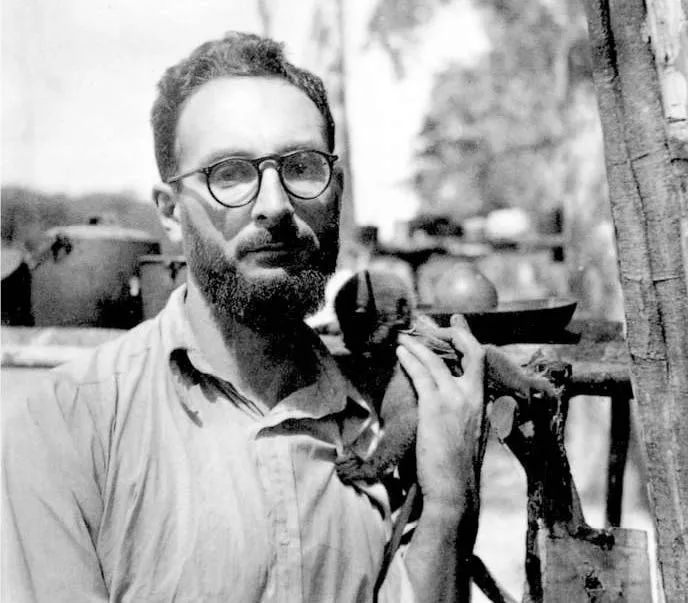
claude levi strauss and cybernetics (2025) article by Alex Taek-Gwang Lee
adding page because of nika dubrovsky‘s fb post [https://www.facebook.com/photo?fbid=10236617897404189&set=a.1386428257552]:
Tired, sick, logged into fb to read something in messenger and found this text. I’m going to have to read this. [links to 2025 article by Alex Taek-Gwang Lee (I’m a writer moonlighting as a philosophy and cultural studies professor in South Korea. Basically, I get paid to overthink things and confuse students in two languages.) – Lévi-Strauss and Cybernetics
added cybernetics page same day.. one of the reasons didn’t include a cybernetics page before: anarchism & cybernetics of self-org systems.. et al
notes/quotes from article:
A key moment in French theory occurred when Claude Lévi-Strauss encountered Roman Jakobson in New York in 1940. Rather than merely a meeting between a linguist and an anthropologist, this historical episode stands for a dramatic collaboration formed by specific post-World War II conditions and furthered by the proceedings of the Cold War. As poststructuralism rose to prominence, Lévi-Strauss faded into obscurity, reduced to an overlooked and dismissed figure. Still, his contribution to the history of French theory would be difficult to underestimate, and his connection to Jakobson and the legacy of Russian Formalism was fundamental to the new intellectual movement.
to me.. intellectness as cancerous distraction et al.. graeber can’t know law et al..
what if, concealed within the textbook history of 20th-century French theory, lies an absorbing and intriguing historical truth? History tends to fade into oblivion and crumble into ruins. Yet, these remnants echo an unwritten past, vanquished and obliterated in the throes of power struggles. I have long believed that theory is nothing less than the embodiment of such ruins. Far from a purely intellectual movement, structuralism reveals a surprising entanglement with the postwar order and the Cold War’s icy grip. The Marshall Plan, wielding pragmatism and technocracy as weapons against communism’s expansion, served as an unexpected catalyst for the birth of structuralism. A collaborative effort between the Rockefeller Foundation and “a worldwide fraternity of scientists” steered this effort behind the scenes (Geoghegan 2011, 102).
to me.. nothing in history ness.. human history.. et al.. to date is legit.. ie: black science of people/whales law et al
Jakobson’s and Lévi-Strauss’s growing interest in cybernetics and information theory coincided with their affiliation with the Rockefeller Foundation, a staunch supporter of scientific research in those fields. The foundation viewed these disciplines as interrelated components of a broader initiative for global scientific reform. This reform addressed social and political issues by applying expert-led, rational solutions to replace partisan disagreement with objective sc
yeah.. oi.. ie: research ness.. cancerous distraction ness.. et al
mufleh humanity law: we have seen advances in every aspect of our lives except our humanity– Luma Mufleh
On the surface, the Marshall Plan aimed to create stability and foster liberalism, making them less susceptible to communist appeals. The plan provided aid to recuperate infrastructure, revive industries, and modernise economies, facilitating economic growth and prosperity, seen as essential for democratic institutions to flourish
to me.. any form of democratic admin is a cancerous distraction.. and won’t get to the root of problem
legit freedom will only happen if it’s all of us.. and in order to be all of us.. has to be sans any form of measuring, accounting, people telling other people what to do
how we gather in a space is huge.. need to try spaces of permission where people have nothing to prove to facil curiosity over decision making.. because the finite set of choices of decision making is unmooring us.. keeping us from us..
ie: imagine if we listen to the itch-in-8b-souls 1st thing everyday & use that data to connect us (tech as it could be.. ai as augmenting interconnectedness)
the thing we’ve not yet tried/seen: the unconditional part of left to own devices ness
[‘in an undisturbed ecosystem ..the individual left to its own devices.. serves the whole’ –dana meadows]
there’s a legit use of tech (nonjudgmental exponential labeling) to facil the seeming chaos of a global detox leap/dance.. for (blank)’s sake..
ie: whatever for a year.. a legit sabbatical ish transition
otherwise we’ll keep perpetuating the same song.. the whac-a-mole-ing ness of sea world.. of not-us ness.. of part\ial ness.. [again].. for (blank)’s sake..
Lévi-Strauss was an ambivalent figure, both a beneficiary of the Rockefeller Foundation’s support for this liberal revival and at odds with its ethos. His adept navigation between political administration and social science caught the attention of the U.S. Federal government. Before he arrived in the United States, an unidentified individual from Poughkeepsie, New York, sent a postcard to J. Edgar Hoover, labelling Lévi-Strauss as part of a group of “Jewish international communists,” bringing him to the FBI’s notice. As Lévi-Strauss assumed the centre’s management at the École Libre, the FBI began monitoring his mail and conducting inquiries in New York. They meticulously documented Lévi-Strauss’ pre-war activities in Latin America, his role at the École Libre, and his various engagements in advising and delivering speeches for the U.S. government. Hoover expressed concern in a memo, citing an informant’s recent claim that Lévi-Strauss and his colleague, Surrealist André Breton, were “closely connected with a group in Mexico which is very bad, having something on their minds different from what the rest of us have on our minds
Against the FBI’s suspicion, Lévi-Strauss arrived in New York in late May 1941, carrying a crate filled with ethnographic materials, personal belongings, and a modest amount of currency. The protracted journey into exile, which had commenced a year earlier in the seemingly peaceful woods behind the Maginot Line, had finally concluded. He registered at the New School for Social Research, which had assumed the role of a welcoming hub, aiding disoriented exiles in finding their footing. By his arrival, approximately thirty thousand French individuals had sought refuge in New York. Among them were affluent émigrés avoiding the disruptions of war, as well as impoverished artists and academics (Mehlman 2000, 181-196). ..Just as he seemed to have found a new home in this exile of avant-garde art, he met Jakobson, who set him on a new path.
During the late 1940s and early 1950s, both Jakobson and Lévi-Strauss found inspiration in the emerging fields of cybernetics and information theory, pioneered by Norbert Wiener and Claude Shannon, respectively.
norbert wiener.. human use of human beings et al
Lévi-Strauss explicitly acknowledges this influence in his work, particularly in *“Language and the Analysis of Social Laws,” a symposium presentation in 1949 that was later published in 1951, and in “The Mathematics of Man” in 1954. In the former, he outlines **his model of social life, depicting it as composed of systems of exchange and interplay across kinship, the economy, and language. At the 1952 Conference of Anthropologists and Linguists in Bloomington, Indiana, Lévi-Strauss presented a paper titled ***“Toward a General Theory of Communication,” and his overview of the conference from the anthropological perspective appeared in Structural Anthropology under the title “Linguistics and Anthropology.” To quote:
*language as control/enclosure.. of math and men.. et al
**social life in sea world.. ie: marsh exchange law et al..
***need most/first: means (nonjudgmental expo labeling) to undo hierarchical listening as global detox so we can org around legit needs
intellectness as cancerous distraction we can’t seem to let go of.. there’s a legit use of tech (nonjudgmental expo labeling).. to facil a legit global detox leap.. for (blank)’s sake.. and we’re missing it
This quote shows that Lévi-Strauss establishes Jakobson’s linguistics as a scientific foundation for general theories of social structure. He was fascinated by Jakoson’s theory of language. In an interview with Didier Éribon, Lévi-Strauss confessed that he was a naïve structuralist doing structuralism without knowing it.
need: structureless\ness et al
However, Lévi-Strauss’s acceptance of structuralism was singular. It was that he saw structuralism as a kind of extension of naturalism, a view that diverged from many structuralists at the time. While the extension of linguistic structuralism to all human sciences was welcomed eagerly by many, the naturalistic perspective was generally regarded as improper, a kind of intellectual misstep best left unacknowledged. ..he conceived a potential convergence of the sciences of nature and culture, from the most fundamental mechanisms of life to the most intricate human phenomena.
These statements depict the logical development of Lévi-Strauss’s adoption of cybernetics and information theory as an integrated discipline that combines linguistics and anthropology. The two books that formalised the theory of cybernetics are Wiener’s Cybernetics and Shannon and Weaver’s *The Mathematical Theory of Communication. Lévi-Strauss’s concept of structure cannot be separated from the notion of communication in the latter. In the book, **Shannon and Weaver defined communication as “all of the procedures by which one mind may affect another,” including “not only written and oral speech, but also music, the pictorial arts, the theatre, the ballet, and in fact all human behaviour” (Shannon 1963, 3).
*oi
**yeah.. total sea world ness.. and maté trump law ness..
again.. the thing we’ve not yet tried/seen: the unconditional part of left to own devices ness
[‘in an undisturbed ecosystem ..the individual left to its own devices.. serves the whole’ –dana meadows]
*In essence, information serves as a measure of one’s freedom of choice when selecting a message. When faced with a basic situation requiring a choice between two messages, it is arbitrarily stated that the information associated with this situation is unity.
oi.. again.. how we gather in a space is huge.. need to try spaces of permission where people have nothing to prove to facil curiosity over decision making..
because the finite set of choices of decision making is unmooring us.. keeping us from us..
ie: imagine if we listen to the itch-in-8b-souls 1st thing everyday & use that data to connect us (tech as it could be.. ai as augmenting interconnectedness)
4. French Theory and Cybernetics
Although he did not know it then, the strange man’s theory about creating an “artificial brain” would later shape Lévi-Strauss’s path when he met Jakobson. According to their correspondence, Jakobson sent Lévi-Strauss Shannon and Weaver’s book. In the letter, Lévi-Strauss wrote that “I literally devoured the Mathematical Theory, etc,” and emphasised that
oi.. again.. there’s a legit use of tech (nonjudgmental exponential labeling) to facil the seeming chaos of a global detox leap/dance.. for (blank)’s sake..
Lévi-Strauss sought to establish a unified science by introducing cybernetic theory into anthropology. Interestingly, this aligns with the thinking of Wiener, who wrote Cybernetics, where the author argued that “the most fruitful areas for the growth of the sciences were those which had been neglected as a no-man’s land between the various established fields” (Wiener 1965, 4). Wiener envisioned a theory of cybernetics as a general theory that could communicate with each other across the scientific jargon that was locked in the narrow confines of this specialisation; Lévi-Strauss’s structuralism was setting the same goal.
again.. need deeper.. ie: need means (nonjudgmental expo labeling) to undo hierarchical listening as global detox so we can org around legit needs
..The article discusses how Shannon’s mathematical theory of communication serves as a cohesive element across disciplines, not only by encouraging data extrapolation and quantitative analysis in the social sciences, but also by incorporating Lévi-Strauss’s concept of “qualitative mathematics.” This “mathematics of man” involves representing social mechanisms as equations akin to the objective formulas found in fields such as macroeconomics and demography.
oi
According to him, the past challenge in studying qualitative aspects required either intricate manipulation or excessive simplification when approached quantitatively. *Contemporary mathematics addresses this by establishing precise relationships among classes with discontinuous values. The emerging mathematics specific to human phenomena aims to diverge from the traditional social sciences’ reliance on “great numbers” and graphing continuous movements. **Instead, it focuses on studying small numbers and the significant changes occurring during transitions between them. From this perspective, he argued that “this mathematics of man – to be discovered along lines that neither mathematicians nor sociologists have as yet been able to determine exactly, and which is, no doubt, still to be elaborated to a very large extent – ***will, in any event, be very different from the mathematics which the social sciences once sought to use to express their observations in precise terms” (Lévi-Strauss 2008, 22). This “different mathematics” was the essence of Lévi-Strauss’s structuralism.
*oi.. precise relationships.. oi.. graeber unpredictability/surprise law et al..
**need small is {ginormous} beautiful ness.. not just approaching the limit but rather even.. at the limit of unconditional ness.. again.. the thing we’ve not yet tried/seen: the unconditional part of left to own devices ness
***not diff if still any form of m\a\p
In 1948, Jakobson attended the Macy Conference on cybernetics as a guest. This was a result of the insistence of Gregory Bateson and Margaret Mead, who had been involved with the conference from its earliest days, that social scientists should be actively invited to participate in solving “the fault lines between the natural sciences and the social sciences” at the Macy Conference on cybernetics (Kline 2015, 37). ..the Macy Conference played a pivotal role in advancing cybernetics and information theory within the social sciences and biology.
According to Kline, “he was overjoyed that the group had finally taken the psychiatrists’ notion of the unconscious seriously” (Kline 2015, 64). This was particularly challenging between the physical and biological sciences on one side and the psychological and social sciences on the other.
Lévi-Strauss interpreted Marcel Mauss’s social theory, suggesting that primitive gift-giving practices constituted systems of cybernetic communication. ..Lévi-Strauss’s structuralism is not merely a relic of the past, surpassed by poststructuralism. Instead, it remains a significant presence in contemporary discourse, as the challenges it presented endure.
gift\ness et al
At the core of Levi-Strauss’s philosophy lies the notion that human beings should be understood as fundamental elements of the natural world, formed by biological and physical elements that determine their existence. This determination *occurs through unconscious processes of human intellectual activity, deeply rooted in our biological makeup and the brain’s physiological conditions. Consequently, the development of culture simply represents the realisation of a **preexisting underlying system inherent in nature. The adherence of the human mind to natural laws enables the emergence of exchange, the fundamental driver of social interaction, and the attribution of meaning. Thus, symbolism, exchange, and signification are inherently linked to nature, forming an inseparable and continuous association. Formerly perceived as a theoretical limitation of Lévi-Strauss, this naturalistic perspective now functions as a crucial subject for reconsideration in a world that calls for a ***new perspective on nature, prompting a reevaluation of his structuralist approach.
*to me.. this is whalespeak.. cancerous distraction to the dance.. ie: thinking it has to happen thru intellect ness et al
**to me.. this isn’t inherent in nature.. isn’t the pre pre existing.. just pre existing in sea world with all the exchange/driver/attribution ness..
***not new/diff is still any form of m\a\p.. ie: exchange, symbolism.. et al..
5. Conclusion
Structuralism entailed the thorough classification of system elements, comprehension of their interrelations, and recognition of patterns as initial steps toward comprehension. In a paradoxical turn, poststructuralism employs structuralist methods to deconstruct the implicit logic that underpins structuralism. The crucial distinction between structuralism and poststructuralism resides in their attitudes toward communication. Poststructuralism ultimately differs from Lévi-Strauss’s notion, rejecting the belief that *societal processes can be linguistically represented. While the extent to which poststructuralism constitutes a fundamental departure from structuralism is debatable, it cannot be denied that poststructuralism owes its existence to the foundation established by structuralism. Poststructuralism emerged as a theoretical current seeking to reexamine cybernetics and information theory, **particularly challenging the mathematisation of knowledge, as critiqued by Lévi-Strauss. It extends the limits of what Lévi-Strauss referred to as “the mathematics of man.” In today’s context, with the proliferation of artificial intelligence and automation, the issues structuralism confronted in the past resurface, underscoring the lasting significance of the French engagement with technology from the 1960s
*lanier beyond words law et al
**need to let go of not only the math ness.. but the knowledge ness.. again.. graeber can’t know law et al
and again.. mufleh humanity law: we have seen advances in every aspect of our lives except our humanity– Luma Mufleh
pearson unconditional law: what is it about loving each other unconditionally that scares us so much – come sunday (pearson)
art (by day/light) and sleep (by night/dark) as global re\set.. to fittingness (undisturbed ecosystem)
______
_____
______
______
_______
_____





 be you.