you can see everything
it took me a long time to be ok with letting someone see me cry
to me.. all in sea world.. doing/being khan filling the gaps law in all the different ways..
adding page because of and via todd m fb share (first intro’d to it via kim‘s fascination with it):
Saw it last night. Quick take (no spoilers): It’s a wildly fascinating and ground-breaking film that does things I’ve never seen before in a documentary—from how the extreme close-ups push the viewer’s perspective from intimacy to hyper-reality, to how Nathan (co-director) presents himself visually as a subject to be examined alongside his subjects, to how dramatically the viewers’ understanding and alliances may shift throughout the film. But perhaps the most unexpected thing for me was how funny this movie was. We saw it in a packed theatre and I’ve rarely heard so many laugh-out-loud moments (especially in a film as tonally serious as this).
BTW: The allusion to Baudrillard is no accident. The question of what is simulation/simulacra vs. reality is at the heart of the film. And the film’s exploration of how we might determine if someone is lying and deliberately gas-lighting us, or genuinely delusional seems an essential question for our times.
via wikipedia [https://en.wikipedia.org/wiki/You_Can_See_Everything]:
You Can See Everything is a 2026 American documentary film directed by Nathan Fielder (in his feature directorial debut) and Lance Oppenheim. It follows Elizabeth Holmes, the founder of the defunct health technology company Theranos, and her partner Billy Evans, who invited a film crew to document them beginning in the weeks before Holmes began serving a United States federal prison sentence for defrauding investors.
elizabeth holmes.. et al
The film premiered as a secret screening at the 53rd Telluride Film Festival on September 6, 2026, and was theatrically released by A24 on October 16. It received widespread praise from critics and has grossed $15.6 million against a $7 million production budget
In 2023, thirty-four days before Elizabeth Holmes begins her eleven-year prison sentence for defrauding investors with her company Theranos, she and her partner Billy Evans invite filmmakers Nathan Fielder and Lance Oppenheim to document their lives at a rented beach house in Del Mar, California. Despite having extensive access to their personal lives, Fielder suspects the couple of withholding information. Holmes denies intentionally misleading anyone about Theranos’s purported blood-testing device, and she and Evans continue contacting prospective investors about a new version of the device.
Fielder and Holmes discuss the semantics of what Holmes meant when she pitched her invention versus what investors thought she meant, but the discussion results in confusion. Fielder shows the couple the Abbott and Costello routine “Who’s on First?” in an attempt to explain his frustration communicating with Holmes. Holmes finds the routine humorous, but admits to not understanding the joke. Evans claims that Holmes’s response exemplifies how she “thinks differently”. Later, Fielder shows them scenes from The Dropout, a miniseries starring actress Amanda Seyfried as Holmes, but a distressed Holmes asks to stop watching. Shortly before her imprisonment, Holmes has her body 3D-scanned and expresses concern that her likeness could be misused. Holmes reports to Federal Prison Camp, Bryan, where she bids Fielder goodbye before beginning her sentence. Evans and their two children subsequently relocate to Texas to be near her.
Filming resumes two years later. Fielder meets with Seyfried and asks her to reprise her role as Holmes in dramatic reconstructions of encounters with Holmes and Evans that he was not allowed to film, with actor Christopher Abbott portraying Evans.
Fielder recounts a meeting between himself, Oppenheim, Holmes, Evans, and two executives from A24 before filming began. While Holmes was in another room, Evans requested a cut of the documentary’s profit. Despite concerns about a conflict of interest, the filmmakers negotiated a profit-sharing agreement with him. It is unclear if Holmes knew about this deal and if her absence during that particular part of the meeting was planned. Later, Holmes told Fielder that she would receive no money from the documentary, raising suspicions about Evans exploiting her.
Fielder and Seyfried uncover further examples of Evans controlling Holmes’s public image: Evans has erected billboards featuring Holmes, impersonated her on X whilst using vulgarities, and authorized the public release of an AI model resembling her. Fielder and Seyfried confront Evans, during which Seyfried briefly speaks with Holmes via telephone. Evans reveals that he holds power of attorney for Holmes and claims that many of his social media posts reflect emails she sends him from prison, and admits that Holmes knows “some” details of his agreement with the filmmakers. Seyfried accuses him of exploiting Holmes, which Evans denies before confronting Seyfried over referring to right-wing commentator Charlie Kirk as “hateful” after he was murdered, which upset Evans as a fan of Kirk.
Frustrated with Evans’s interference, Fielder arranges to visit Holmes in prison. Since Fielder is barred from filming in the visiting room, he reenacts the meeting with Seyfried. In the reenactment, Holmes expresses anger over Seyfried’s portrayal of her in The Dropout, claiming that her fellow inmates have watched the series and mistreat Holmes over actions she maintains she never committed. This upsets Seyfried, who says that she was just making television.
Holmes claims to approve of Evans’s activities since her imprisonment, but remains vague about her knowledge of his agreement with the filmmakers or his conduct outside of the documentary. She explains that she leaves financial decisions to Evans because she owes hundreds of millions of dollars in restitution. Evans arrives with their children for their weekly visit, and he and Holmes tearfully embrace, which Fielder interprets as genuine affection. Seyfried suggests that Fielder has developed a protective attachment to Holmes and is no longer objective, but both remain uncertain about Holmes’s sincerity and intentions.
On-screen text reveals that Evans relinquished his profit-sharing agreement before the film’s release. It also states that Amy Chozick, a reporter for The New York Times, stands by (but does not provide evidence for) a remark that she alleges Holmes made about The Dropout: “They’re not playing me. They’re playing a character I created.” Though Holmes and Evans denied that the quote was accurately transcribed, they were unable to find their own recording of it.
Ari Balouzian, a frequent collaborator of Oppenheim’s, composed the soundtrack for You Can See Everything. The soundtrack features 25 tracks which “help [to] build the film’s uneasy atmosphere” and borrows from Bernard Hermann’s score from Alfred Hitchcock’s Vertigo. [via google: An acrophobic former detective becomes dangerously obsessed with a mysterious woman, only to discover she was part of an elaborate murder scheme.]
via google:
You Can See Everything has left viewers completely obsessed and unable to stop thinking about it is that it isn’t a conventional documentary—it is a psychological experiment that forces the audience to participate in being deceived
1. The Clashing “Masters of Deception”
The film pits Nathan Fielder, a creator famous for meticulously manipulating reality and strangers, against Elizabeth Holmes, one of the most notorious corporate fraudsters of the 21st century. Viewers are left reeling by the intense psychic clash between the two, trying to figure out who is manipulating whom.
to me .. cancerous distraction.. since none of us are us .. ever since that day
2. A Terrifying “Sympathy for the Devil”
Fielder deliberately excludes almost all evidence, victims, and whistleblowers from the movie. By stripping away the *clinical facts of the Theranos scam, the film leaves viewers isolated with Holmes as a human being and a mother. Viewers are walking out of theaters **deeply unsettled by how badly they wanted to believe her lies and how easily they were drawn into her delusional thinking.
*proof/fact/intellectness as cancerous distraction
**because our hearts/souls are unsettled with anything other that legit love/trust/freedom
we need global detox to get us back/to hearing/being that..
3. The Unsettling Focus on Billy Evans
The second half explores Holmes’ partner, Billy Evans, as he transitions into a tech gadfly in Austin, Texas. Viewers are fascinated and disturbed by the bizarre power dynamic between them, questioning if Evans is a naive rich kid being used, or a willing participant playing a calculated role.
4. A Mind-Bending Meta Narrative
Because Holmes goes to prison halfway through, the documentary shifts into a reality-overlapping experiment where Fielder hires an actor to recreate moments with her. In a massive surprise, Amanda Seyfried (who won an Emmy for playing Holmes in The Dropout) appears in the film. Fielder, Holmes, and Evans actually watch Seyfried’s scripted performance together, creating an eerie, multi-layered hall of mirrors that completely “breaks the brain” of the audience
Ultimately, people can’t stop talking about it because the movie’s title is an ironic lie. It proves that despite three hours of unrestricted visual access, we can never truly see or know everything about another human being.
again.. paul know\love law.. graeber can’t know law.. even of ourselves.. graeber unpredictability/surprise law.. if we think we know.. we’re actually killing ourselves softly with same song
The dialogue cuts to black, and the film ends on a heavily disputed real-life quote from a New York Times profile of Holmes:
“They’re not playing me. They’re playing a character I created.”
Throughout the documentary, Holmes and Evans desperately try to prove the Times misquoted her—*claiming she actually said “a character they created” to shift the blame to the media. By ending the entire three-hour experience on that exact quote, Fielder leaves the audience with a **chilling realization: we will never know if the “humanized” Elizabeth Holmes we just spent three hours watching was real, or just another character she engineered
*us & them as perpetuating the whac-a-mole-ing ness of sea world.. of not-us ness.. of part\ial ness.. perpetuating survival triage.. for (blank)’s sake..
**says a lot about us.. so desperate to ‘see’.. yet can’t.. ie: paul know\love law et al.. and then khan filling the gaps law.. leaving us with pearson unconditional law.. and again.. why we so desperately need tech w/o judgment
to me.. this is just more insight.. that we are globally/individually ready for a legit re\set
what we need to be addressing/trying/’seeing’ are the conditions for us to all be legit free
the world desperately needs a means (nonjudgmental expo labeling) to undo hierarchical listening/seeing/being – so we can hear/see what’s already on each heart as global detox in order to org around legit needs
de saint-exupéry essential law et al
findings (aka: the things i can’t unsee) from on the ground ness deep dive and why we need tech w/o judgment
ie: the dance won’t dance unless/until it’s 1\ all of us 2\ legit free
nothing to date (ever since that day) has gotten to that root of problem
legit freedom will only happen if it’s all of us.. and in order to be all of us.. has to be sans any form of measuring, accounting, people telling other people what to do
the thing we’ve not yet tried/seen: the unconditional part of left to own devices ness
[‘in an undisturbed ecosystem ..the individual left to its own devices.. serves the whole’ –dana meadows]
[note: i also thing we need to let go of seeing/observing ness for the dance to dance.. and of course i’ll relate it back to kim – as i think that thinking that we ‘see’ things.. perpetuates agenda ness]
ie: whatever for a year.. a legit sabbatical ish transition
otherwise we’ll keep perpetuating the same song.. the whac-a-mole-ing ness of sea world.. of not-us ness.. of part\ial ness.. perpetuating survival triage.. for (blank)’s sake..
_____
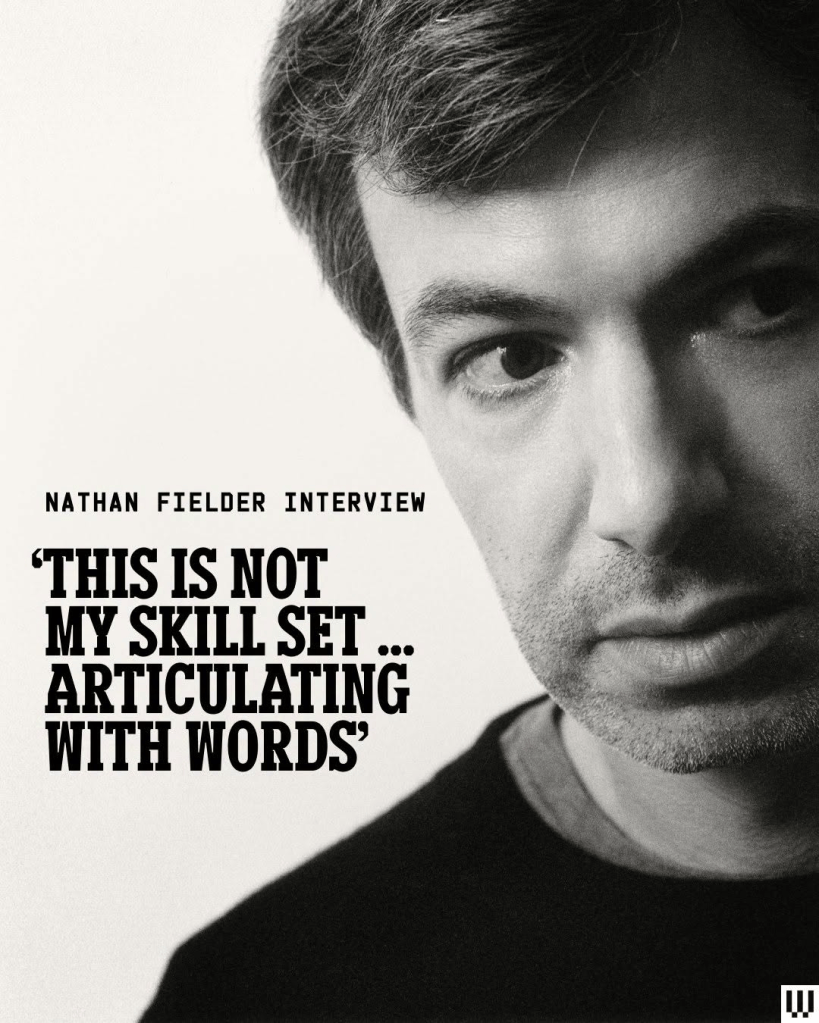
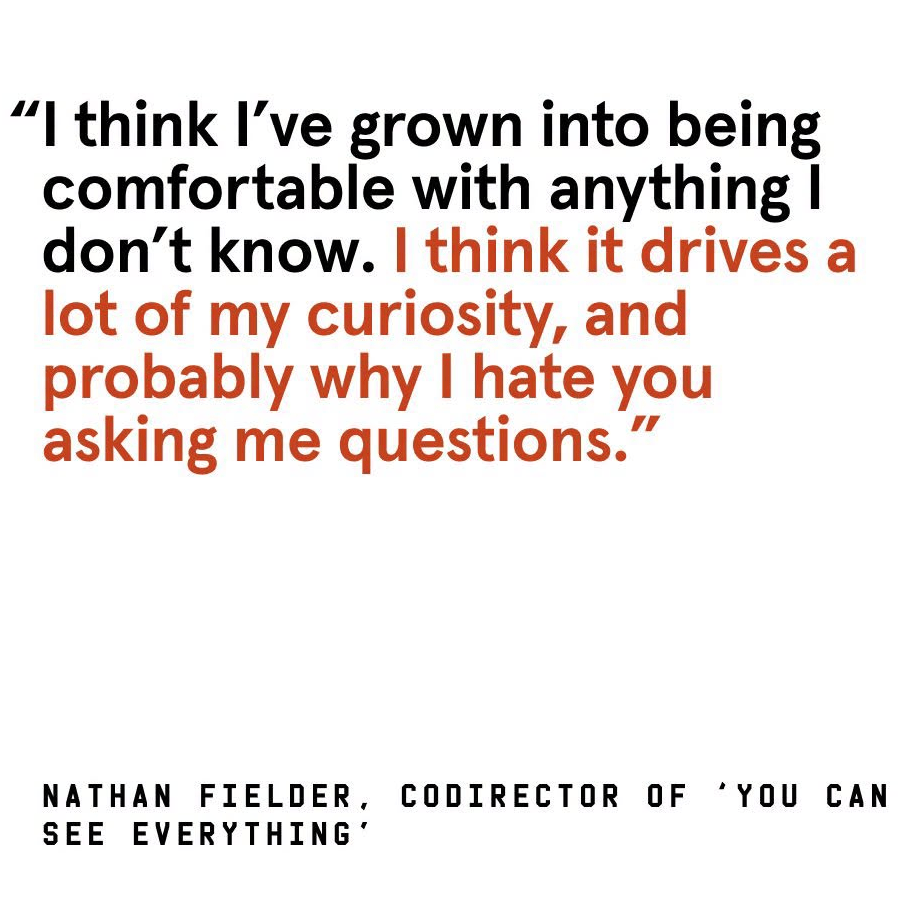
via fb post on nathan interview ness [https://www.facebook.com/photo/?fbid=1480631953932392&set=pcb.1480632460599008]:
article is paywalled
_____
_____
_____
_____