ilya prirogine
intro’d via john m (museum of care) convos

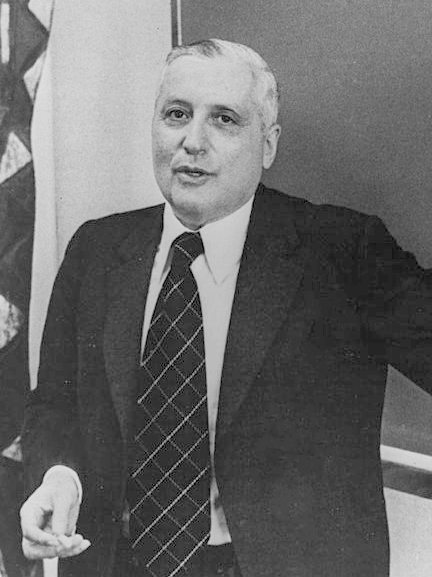
Viscount Ilya Romanovich Prigogine (/prɪˈɡoʊʒiːn/; Russian: Илья́ Рома́нович Приго́жин; 25 January [O.S. 12 January] 1917 – 28 May 2003) was a Belgian physical chemist of Russian-Jewish origin, noted for his work on dissipative structures, complex systems, and irreversibility.
Prigogine defined dissipative structures and their role in thermodynamic systems far from equilibrium, a discovery that won him the Nobel Prize in Chemistry in 1977. In summary, Ilya Prigogine discovered that importation and dissipation of energy into chemical systems could result in the emergence of new structures (hence dissipative structures) due to internal self reorganization. In his 1955 text, Prigogine drew connections between dissipative structures and the Rayleigh-Bénard instability and the Turing mechanism.
carhart-harris entropy law et al
fromm spontaneous law et al
graeber unpredictability/surprise law et al
Dissipative structures theory
Dissipative structure theory led to pioneering research in self-organizing systems, as well as philosophical inquiries into the formation of complexity in biological entities and the quest for a creative and irreversible role of time in the natural sciences.
self-organizing ness
daniel (w) on regen & self org et al
With professor Robert Herman, he also developed the basis of the two fluid model, a traffic model in traffic engineering for urban networks, analogous to the two fluid model in classical statistical mechanics.
rather.. naked streets et al
Prigogine’s formal concept of self-organization was used also as a “complementary bridge” between general systems theory and thermodynamics, conciliating the cloudiness of some important systems theory concepts with scientific rigor.
oi.. science scientifically et al
Work on unsolved problems in physics
mufleh humanity law: we have seen advances in every aspect of our lives except our humanity– Luma Mufleh
we need a problem deep enough to resonate w/8bn today.. a mechanism simple enough to be accessible/usable to 8bn today.. and an ecosystem open enough to set/keep 8bn legit free
ie: org around a problem deep enough (aka: org around legit needs) to resonate w/8bn today.. via a mechanism simple enough (aka: tech as it could be) to be accessible/usable to 8bn today.. and an ecosystem open enough (aka: sans any form of m\a\p) to set/keep 8bn legit free
thinking restate/update 7.18.. and 2\ short findings restate in 2019
1\ undisturbed ecosystem (common\ing) can happen
2\ if we create a way to ground the chaos of 8b legit free people
In his later years, his work concentrated on the fundamental role of indeterminism in nonlinear systems on both the classical and quantum level. Prigogine and coworkers proposed a Liouville space extension of quantum mechanics. A Liouville space is the vector space formed by the set of (self-adjoint) linear operators, equipped with an inner product, that act on a Hilbert space. There exists a mapping of each linear operator into Liouville space, yet not every self-adjoint operator of Liouville space has a counterpart in Hilbert space, and in this sense Liouville space has a richer structure than Hilbert space. The Liouville space extension proposal by Prigogine and co-workers aimed to solve the arrow of time problem of thermodynamics and the measurement problem of quantum mechanics.
that problem is that we need (and can’t seem to) let of measuring.. of any form of m\a\p
literacy and numeracy both elements of colonialism/control/enclosure.. we need to calculate differently and stop measuring things
Prigogine co-authored several books with Isabelle Stengers, including The End of Certainty and La Nouvelle Alliance (Order out of Chaos).
again.. carhart-harris entropy law ness
embracing uncertainty.. taleb antifragile law.. et al
The End of Certainty
In his 1996 book, La Fin des certitudes, written in collaboration with Isabelle Stengers and published in English in 1997 as The End of Certainty: Time, Chaos, and the New Laws of Nature, Prigogine contends that determinism is no longer a viable scientific belief: “The more we know about our universe, the more difficult it becomes to believe in determinism.” This is a major departure from the approach of Newton, Einstein and Schrödinger, all of whom expressed their theories in terms of deterministic equations. According to Prigogine, determinism loses its explanatory power in the face of irreversibility and instability.
again.. on antifragile ness
Like weather systems, organisms are unstable systems existing far from thermodynamic equilibrium. Instability resists standard deterministic explanation. Instead, due to sensitivity to initial conditions, unstable systems can only be explained statistically, that is, in terms of probability.
this is why we need to let go of thinking we have to explain.. to know.. things..
and why we haven’t yet gotten to global equity (everyone getting a go).. we keep using whales in sea world as our data/research/science/history.. rather than organism as fractal
_________
ilya on order thru fluctuation
_________
________
________
_______
________
________





 be you.