About playgrounds, I received such a letter from the author of the book dedicated to Berlin playgrounds.
Simone Pierini: My favorite playgrounds are the “abstract” ones because, unlike the “figurative” ones, they allow you to unhinge pre-game hierarchy dynamics.
If a child is usually bullied, in a figurative park (e.g., cowboys, pirates, castle) he or she will be relegated to roles where he or she will suffer the domination of the bullies, but if, on the contrary, children find themselves playing in a space where they are greeted by seemingly meaningless geometric shapes there, new and different dynamics will be created that will allow for “balancing” pre-existing differences.
Indeed, thematic playgrounds imply some rules of the game, and organized games, unlike free play, are always hierarchical and imply competition i.e. violence.
But I really like the playground with the cake, published in Simone’s book. Based on the many years of experience of an adult spending time with children on playgrounds, I know that next to the traditional cake, little cooks will bake such cakes that everyone will become a valuable object of exhibition in the Museum of Contemporary Art.
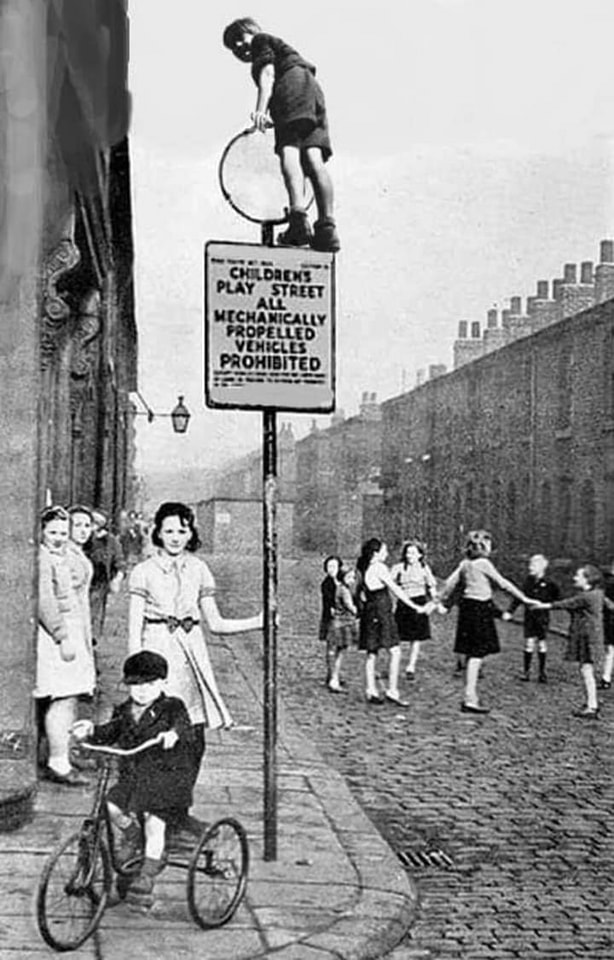
It turned out that a space for play—where people of all ages come together—is a very important part of city life. I was thinking it might be interesting to come together and discuss in more details what playgrounds could look like.
I totally agree with him that the waters of our lives (both adult and child) runs precisely between the concept of free play and play by rules.
In free play, children and adults are involved only for its sake. For the joy of playing and interacting with one another. The goal of the free game is to unite, to invent, to try on new roles on oneself and on game partners.
I think the best example of free play is Carnival. The most accurate example of playing by the rules is war.
During Carnival, new social connections and hierarchies are destroyed and formed. In the Carnival, no one is equal to himself, but all the participants wear masks.
Carnival always ends at some point, which means all powerful relationships during Carnival are temporary.
It is not a coincidence that traditionally carnival kings are jokes and marginals.
No external purpose is pursued by free games. You can change or stop the game in them as soon as it has become bored or unpleasant.
Unlike games of rules. From the Olympics to Military Games, quitting a game, especially if you’re part of a team (and you’re always part of a team in games like that), raises a wide range of emotions from accusations of deficiency to betrayal.
In war and in sports, the uniform is part of the rules, but it must never be changed. If you are Ukrainian or Israeli, until the end of the game you will be considered Ukrainian or Israeli, that is Russian, Palestinian, Russian or Palestinian. However, your real national, political, geographical and any other preferences are not that important.
Strictly set rule games seem fair and exciting. There is a developed system of jury, commentators and accounting.
They did this, and we did this, they’re here now, and we can then do this.
However, the main rule of the games is that someone has to lose, be thrown down and be punished. It is this rule that determines the logic of the game development.
Rule games are as integral part of human culture as free games. Seems like the problem comes when we are no longer able to change the rules of the game, when we forget it is just a game.
And some games can be destructive.
________
another nika fb share:
As for playgrounds, I will follow a proven theme that has been developed during A4kids with cities and schools of the future, it consists of provocation.
Children, as well as adults, are equally interested in both utopian scenarios and scary scenarios. We, as humans, often need to be afraid of something, distract from something, disagree with something.
Therefore, I am planning to come up with one group a playground on which all of us – children and adults would dream of playing at least once in a lifetime and another on which we can play not to agree.
Planning to post results here and on social networks!





 be you.