humans always been wrong about humans
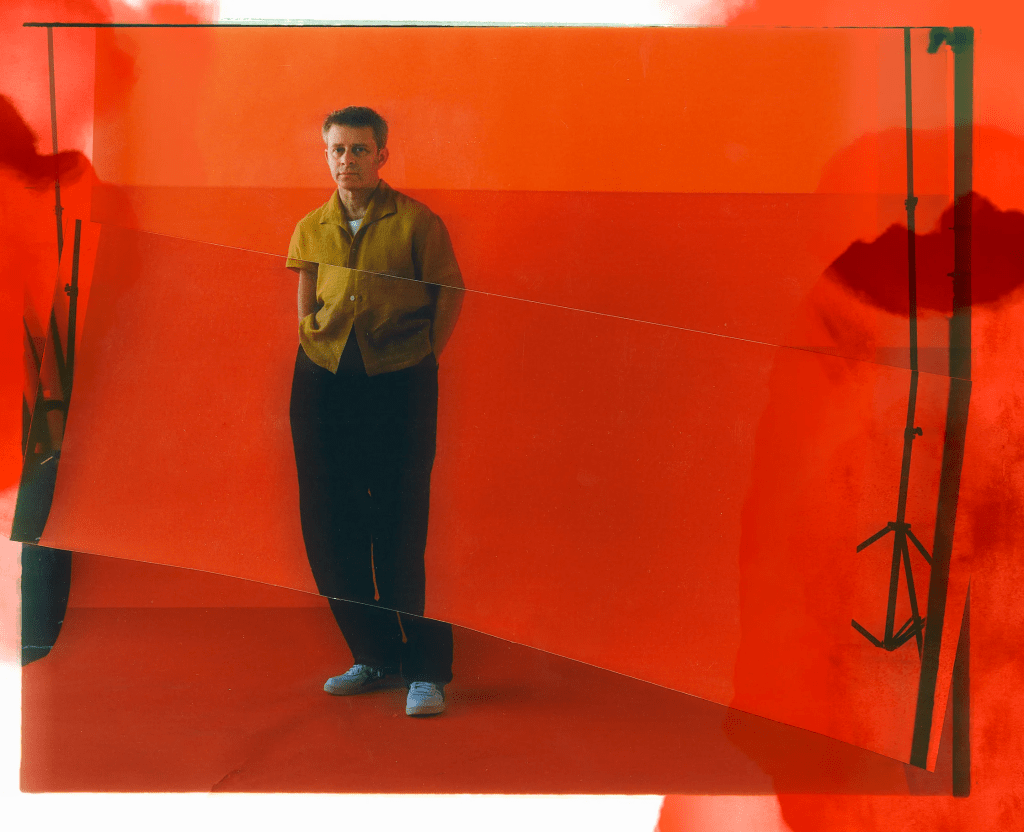
via wired fb share from (2022) wired article on david wengrow about he and david graeber‘s dawn of everything (book) by virginia heffernan @page88 – Humans Have Always Been Wrong About Humans – [https://www.wired.com/story/david-wengrow-dawn-of-everything/]
title is all i wanted.. because huge to black science of people/whales law et al.. huge
we just keep not grokking/trusting that everything ness.. so we keep holding on to forms of m\a\p.. so not changing .. letting go of.. being wrong about.. everything..
notes/quotes from article:
The Dawn of Everything fundamentally shifted my view of … everything. I had to meet one of the minds behind its world-tilting revelations.
but towards bottom.. not everything shifted..
THE PHRASE “THE dawn of everything” first struck David Wengrow, one of the authors of The Dawn of Everything, as marvelously absurd. Everything. Everything! It was too gigantic, too rich, too loonily sublime..t Penguin, the book’s august publisher, would hate it.
but that’s why we have not yet gotten to a global re\set/detox.. we keep not letting go enough (ie: sans any form of m\a\p).. to see.. what legit free people are like
again.. huge
In an act of intellectual effrontery that recalls Karl Marx, Wengrow and Graeber use this insight to overthrow all existing dogma about humankind—to reimagine, in short, everything..t
and so.. need a legit nother way way for 8b people to live.. to leap to.. for (blank)’s sake
need 1st/most: means to undo our hierarchical listening to self/others/nature as global detox/re\set.. so we can org around legit needs
imagine if we listened to the itch-in-8b-souls 1st thing everyday & used that data to connect us (tech as it could be.. ai as augmenting interconnectedness as nonjudgmental expo labeling)
At a time when much nonfiction hugs the shore of TED-star consensus to argue that things are either good or bad, The Dawn takes to the open sea to argue that things are, above all, subject to change.
graeber make it diff law et al.. virus noticings et al.. to (virus) leap et al..
By the time I was halfway through The Dawn, I found myself overcome with a kind of Socratic ecstasy. At once, I felt unsuffocated by false beliefs. I brooded on how many times I’d been told that it’s *natural to keep my offspring strapped to my chest, or sprint like I’m being chased by a tiger, or keep my waist small because males like females who look fertile, or move heaven and earth to help men spread their seed because that’s what prehistoric humans did. This was all a lie. The book’s boldest claim convulsed actual glee: **Humans were never in a state of nature at all! Humans have simply always been humans: ironic, sentient, self-reflective, and free from any species-wide programming. The implications were galactic.
*?
**?.. to me that’s still whalespeak
I also offered condolences on the death of Graeber. The official cause, which Wengrow was reluctant to discuss, was pancreatic necrosis. But on October 16, 2020, Nika Dubrovsky, a Russian artist and Graeber’s widow, wrote that, though she’d shielded Graeber from Covid, he’d occasionally bridled at wearing a mask. “I want to add my own conspiracy theory,” she wrote. “I firmly believe [his death] is related to Covid.”
Wengrow and Graeber were devoted to one another as few writing partners are. Their collaboration seems to have been a case of true philia, the kind of meeting of the minds I associate with J. R. R. Tolkien and C. S. Lewis. Some of this is explained by similarities in their backgrounds. Graeber grew up among working-class radicals in Manhattan, while Wengrow was born to a hairdresser and a partner in a small clothing firm in North London, his grandparents having been, he told me, “gifted people who lost their homes and opportunities when the Nazis came to power.” Though Wengrow’s father later found success in the rag trade, his son was the first in his family to go to college.
Nine years later, Wengrow had just published his second book, What Makes Civilization?: The Ancient Near East and the Future of the West, which argues that civilizations don’t leapfrog from one technological miracle to the next but progress by the gradual transformation of everyday behavior..t
but that’s talking about what whales do.. not what we need to (and now can) do.. to get out of sea world
hari rat park law et al
Determined to preempt critics who’d be eager to pounce on any error, they were meticulous, writing and rewriting each other’s work so thoroughly that neither could tell whose prose was whose. The two never stopped exchanging ideas, and they were still planning a sequel to The Dawn—or maybe three—when Graeber died.
Given his background, Wengrow has never shaken the feeling of being an outsider in academia. “Oddly, this feeling doesn’t go away even when you achieve a degree of recognition and status,” he told me. He and Graeber “could relate on that level. And there was a common sense of humor, which comes from the Jewish background. If he hadn’t heard from me in a couple of days he’d call and put on a grandmother sort of voice: ‘You don’t write … you don’t call.’”
The hardest punch thrown by The Dawn is its implicit rejection of Margaret Thatcher’s infamous assertion that “there is no alternative” to feral capitalism,..t a claim still abbreviated in Britain as “TINA.” Laying waste to TINA, The Dawn opens a kaleidoscope of human possibilities, suggesting that today’s neoliberal arrangements might one day be remembered as not an epoch but a fad.
problem is.. we don’t really grok what a legit alt would/could be.. again.. we keep not letting go enough to see.. so we keep perpetuating myth of tragedy and lord.. even when we think we’re changing (or at least talking about) everything.. (has to be sans any form of m\a\p)
I turned to Liv, a Portuguese anarchist whose buttons excoriated the foes of the working class and commemorated the Spanish Civil War. “We have to make a change. And it has to be as fast as we can, ..t otherwise … it will kill us all.” I heard this from other Dawn enthusiasts. The book delivers jolts to the system, and—in some readers—shakes defeatist notions that human exploitation is inevitable.
huge.. for (blank)’s sake
and now have means for global leap/reset/detox.. ie: tech/ai/internet as nonjudgmental expo labeling
But why have we felt so defeated, so locked into TINA, I wondered. As I took my seat, a plaintive passage from the book popped into my mind: “How did we come to treat eminence and subservience not as temporary expedients … but as inescapable elements of the human condition?” The poltergeist in the air was insistent: Why do we put up with this?
because need global detox/re\set.. the incremental.. part\ial ness .. of not letting go enough.. is keeping us chained.. keeping us from legit global sync..
humanity needs a leap.. to get back/to simultaneous spontaneity .. simultaneous fittingness.. everyone in sync..
1\ undisturbed ecosystem (common\ing) can happen
2\ if we create a way to ground the chaos of 8b legit free people
From the lectern, Wengrow asked that no recording be made. He likes synchronous human exchange in person or by telephone, and he welcomes questions and disruptions. While composing The Dawn, Wengrow and Graeber built arguments to the tune of their own overlapping voices, interruption, enthusiasm, dissent, doubt, and rapturous agreement.
and yet.. we have no idea what legit human communication could be like.. lanier beyond words law et al.. need to try idiosyncratic jargon ness via self-talk as data
Early in the book, the Davids even offer a spontaneous celebration of dialog as the engine of philosophy. “Neuroscientists,” they write, “tell us that … the ‘window of consciousness,’ during which we can hold a thought or work out a problem, tends to be open on average for roughly seven seconds.” This isn’t always true. “The great exception to this is when we’re talking to someone else … In conversation, we can hold thoughts and reflect on problems sometimes for hours on end.”
way deeper if we try imagine if we ness
Wengrow wasn’t thrown. He’s indifferent to wolf-pack dynamics everywhere, most of all in academic settings. A preoccupation of The Dawn, after all, is the contingency of hierarchies. They come and go, sometimes literally with the weather; any system of seniority and groveling is a joke; we are hardwired neither to rule nor to be ruled over. In particular, Wengrow’s own newfound status as an archbishop of archaeology, Mr. $25K-a-membership, struck him as laughable. As Jacques Lacan wrote, “If a man who thinks he’s a king is mad, a king who thinks he’s a king is no less so.”
need 1st/most: means to undo our hierarchical listening to self/others/nature as global detox/re\set.. so we can org around legit needs
In the book’s final chapters, clouds pass overhead. The authors land on the puzzle of modern “stuckness”—the idea that we have lost the experimental spirit that makes humans human and settled into the ruts of our capitalist-neoliberal hellscape. This works as a rhetorical move: No one wants to be stuck, and dread of this fate can impel a person to action. But as an overarching theory, the idea that humans moved from freedom to stuckness seems to reinscribe some of the schematic evolutionary folktales that the book exists to critique. And if our spirits were flying along just fine, creating new worlds until they were all simultaneously crushed by Thatcherian capitalism, isn’t this just a new fall-from-grace story, like the ones that said humanity was wrecked by agriculture or urbanization or the internet?
but we haven’t been flying .. to date
*Contemporary society strikes me as far from stuck. Precarious and imperiled, but not stuck. The pandemic, for one thing, threw into relief the proliferation of cultlike groups that reject modern medicine and even modernity itself. More encouragingly, young workers everywhere are organizing, protesting, and taking to the road in record-high numbers. Gender and race are being reimagined. Any or all of this might be threatening or vertiginous or worse, **but none of it suggests stuckness.
*oh my.. so didn’t shift her thinking in everything.. (the deepest thing.. hari rat park law et al)
**but it all does.. because none of those were able to let go enough.. ie: still talking ie: workers org, protest, gender, race, .. need to let go of any form of m\a\p.. otherwise.. still stuck in sea world
Wengrow didn’t worry too much about my objection. He holds ideas lightly, and if the “stuckness” concept didn’t land for me, he said, maybe I could just let it go. *The book supplies hundreds of rich examples of early societies that didn’t conform to evolutionary stages. The research is what most excites Wengrow. The imperative to act on our humanness—to refuse to sleepwalk, to refuse to get stuck—grows out of the scholarship.
*but too.. none to date have let go of conforming ness..
_______________
_____________
___________
____________
___________
__________
___________
___________




 be you.