renaldo lemos
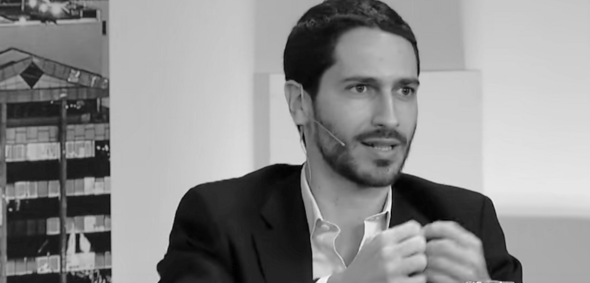
intro’d to Renaldo via Doug‘s share on his thought shrapnel suggested reads:
using the blockchain for the public interest – oct 2016
The essence of the blockchain technology is trust.
? perhaps.. but more about trusting us.. then the tech.. it’s a means/mech that can facil us to live a nother way.. trusting the whimsy/curiosity of humans…. not trusting some tech to manage our B..
The blockchain is perfect for this purpose. It creates an immutable record of signatures, attached directly to the identity of the voter. Because of the blockchain and other certification mechanisms we are adopting, the possibility of fraud will be much lower than when paper signatures are used….id of voter..lower fraud..distribute consensus
lovely except.. we need to disengage from money as os.. we need to disengage from voting ness as well… redefine decision making et al
imagine we use it instead to disengage from money/consensus as os
That can significantly change the profile of democracy in Brazil, establishing a new form of dialogue between citizens and representatives
imagine new form of dialogue.. w no reps
what if our thinking about consensus is what’s getting in the way
This is only the beginning. We believe that the blockchain is a crucial step to establish many applications for the public interest, such as:
The major point here is that we can significantly change the minds and hearts of many people, creating new social practices because of this new technology. There are many pioneers working with the blockchain for profit at the moment. We need more people working with the blockchain´s capabilities for the public interest as well. These can be our new champions of openness.
convo on #openup16
______
2015 –
at the launch debate of the book – networked life – ronaldo and massimo speak as tech has revolutionized communication not only among citizens but between citizens and the world in which they live..
[couldn’t get a translation – so haven’t heard talk]
______
find/follow Renaldo:


Ronaldo Lemos (born 1976) is a Brazilian academic, lawyer and commentator on intellectual property, technology, and culture.
Lemos is the director of the Institute for Technology & Society of Rio de Janeiro (ITSrio.org), and professor at the Rio de Janeiro State University’s Law School. He is also a partner with the law firm Pereira Neto Macedo, and a board member of various organizations, including the Mozilla Foundation,Accessnow.org, and Stellar. He was nominated a Young Global Leader by the World Economic Forumin 2015. He was appointed in November 2015 as a fellow by Ashoka, a civil society organization founded by Bill Drayton.
Lemos was one of the creators of the Marco Civil da Internet, a law enacted in April 2014, creating a comprehensive set or rights for the Internet in Brazil, including freedom of speech, privacy and net neutrality. Because of its impact in favor of an open and free internet, the Marco Civil da Internet law has been covered by publications such as the magazine The Economist, the Wall Street Journal, theFinancial Times, the New York Times, and others. It has also been called by Tim Berners-Lee “a very good example of how governments can play a positive role in advancing web rights and keeping the web open”.
Lemos is Project Lead of the Creative Commons Brazil, Creative Commons International (CCi).
Lemos’ academic qualifications include a J.D., University of Sao Paulo Law School, a Master of Laws degree, Harvard Law School, and a Doctor of Law, University of Sao Paulo. In 2011, Lemos joined theCenter for Information Technology Policy at Princeton University as a visiting fellow. In July 2013, Lemos joined the MIT Media Lab as a visiting scholar. He is also the liaison to the director of the MIT Media Labfor Brazil.
Lemos works with the Brazilian federal government on the implementation of its free software program. Lemos also works with the Ministry of Culture on the implementation of its digital culture policy, and was appointed by the Ministry of Justice to its electronic commerce commission.
Lemos is a founder of Overmundo, for which he received the Prix Ars Electronica Golden Nica in the category of digital communities.
Lemos founded the Center for Technology and Society at the Fundação Getulio Vargas (FGV) Law School in 2003, and was the director of the Center until 2013, succeeded by the former Brazilian Supreme Court Justice Nelson Jobim. He was a co-founder of the Fundação Getulio Vargas Law School in Rio de Janeiro in 2002.
Lemos worked in 1990s at the law firm Suchodolski Advogados Associados, practicing technology, telecommunications and corporate law. He also worked as professor of Sociology of Law at the University of Sao Paulo Law School and at the Brazilian Society for Public Law (SBDP).
He also worked from 2006 to 2009 as a curator for Tim Festival, a large music festival in Brazil. In 2011 he wrote and presented a series of documentaries forMTV Brasil focused on technology and policy issues, called Mod MTV.
He was nominated in February 2012 as a member of the National Council for Fighting Piracy (CNCP), a federal government body coordinated by the Ministry of Justice in Brazil.
He was nominated on July 2012 as a member of the Council for Social Communication, a governmental body created by Article 224 of the Brazilian Constitution. The attributions of the Council include preparing studies, opinions, and recommendations to Congress regarding matters related to communication, media, and freedom of expression. The Council has 13 members. Lemos was appointed counselor by the Brazilian parliament, and his substitute is Juca Ferreira, Brazil’s former Minister of Culture. On 15 July 2015, he was appointed once again a member of the Council for Social Communications in Congress for a second term, and elected as its Vice-President.
Lemos writes weekly to Folha de S.Paulo, the largest national newspaper in Brazil, and contributes to a number of other publications, including Foreign Affairs, Harper’s Bazaar, and Bravo!. He also hosts a weekly TV show at Globonews, the biggest cable news channel in Brazil, called Navegador.
He is since 2010 a curator of the Itaú Cultural Encyclopedia on Art & Technology in Brazil.
[..]
The 2007 documentary Good Copy Bad Copy includes an interview with Lemos, in which he comments on the Brazilian Tecno brega industry and copyright.
Publicly available lectures from Lemos include:
- Google Policy Talk: “Culture Production and Digital Inclusion in Developing Countries”, November 2007
- “TEDx Talk on music, technology, global peripheries, and internet regulation” 2009
_______
what if our thinking about security, voting, measuring exchanges, contracts, property…is what’s getting in the way. what if they are (could/should be) irrelevant (gupta roadblock law). we have the means now – so why don’t we use tech to coordinate/regroup/re self organize us.. rather than making B more efficient…
ie: hosting-life-bits via self-talk as data.. as the day.. aka: not part\ial
_______
__________
Omidyar Network (@OmidyarNetwork) tweeted at 5:16 AM – 24 Nov 2016 :
How can #blockchain be used for the public interest? @lemos_ronaldo discussed at #OpenUp16 https://t.co/mUWyruvBb0 @ITSriodejaneiro #opengov (http://twitter.com/OmidyarNetwork/status/801761519981723648?s=17)
Open Up 2016: Ronaldo Lemos on the blockchain & public interest applications in Brazil
blockchain is a database where can put pieces of info.. however.. distributed
other thing.. it produces consensus.. when put on blockchain.. entire network agrees on it.. ie: how much in bank account
how is that public interest.. ie: it’s already a false consensus.. that money is our os
public consensus always suppress someone (s)
it guarantees integrity..impossible to change it
ability of consensus.. produces trustless trust..
another problem.. trust embedded in network..
so blockchains: distributed data base that is consensual and guarantees integrity
id for govt purposes.. make sure everyone registers.. automatically auditable..
ticket sales.. no more paper tickets for concert
same for financial securities
this sounds like perpetuation of broken feed back .. but not public (humanity) interest..
owner attribution… convert land title.. digital currency.. proof of existence..
?
proof that doc exists w/o storing doc.. register ip rights…
shenzhen ness – we need no ip rights
luxury items.. pharmas.. permission to enter space thru digital lock.. academic certificates..
all not us..
most we’ve seen blockchain used for has been private interest.. that’s why sharing public interest..
_________




 be you.