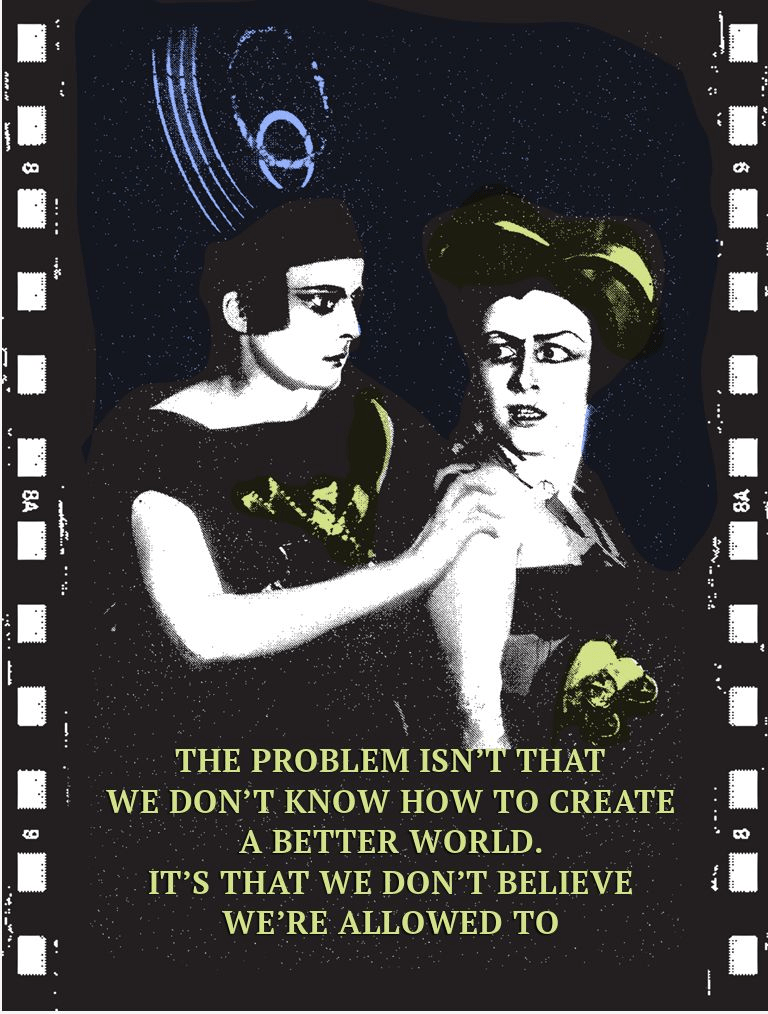
Poetic technologies aren’t gentle or beautiful—they can be dark, dangerous. But that’s what freedom looks like. Bureaucratic technologies promise salvation through “correct rules once and for all.” Always ends the same way. The talk and dialogue will be available to watch online.
The talk is about the ideas behind setting up the David Graeber Institute and the Museum of Care. The Survival Kit Collection brings together collectives developing open source “social technologies” —spirulina farms, self-replicating 3D printers, modular housing, low-cost water systems, and … art and education. In 2019, together with David Graeber, we held the first workshop about the Museum of Care at CCC to reimagine the relation between freedom, technology and value. Over these 6 years, the Museum of Care and the David Graeber Institute have experimented with various projects: the survival collection, Visual Assembly, and creating an open space for horizontal knowledge production—something we hope to develop into an actual University.
We think humanity could already be living in a society of abundance and communal luxury. *We have the technologies to produce enough for everyone to have everything. The issue isn’t technological but social. This is why we need a Museum (of Care): museums are among the few places that create, distribute, and preserve what a society values.
What will be at the session: We’ll tell in more detail about the concept of the Museum of Care on abandoned ships (of which, according to Maritime Foundation data, there are more than 4,500 in the world). We’ll talk about the halls of our museum: the Hall of Giants and other emerging spaces. Projects we’re building—spirulina farms, 3D printers—in Saint Vincent (Caribbean) and Kibera Art District, Nairobi Kenya, Playground designed that communities can construct with nearly no resources. Can we actually build a nomadic museum proud not of its unique exhibits but of how easily they spread and get replicated?
Then we will move to an open conversation about what poetic technologies are and how they differ from bureaucratic ones. Some people may have read David Graeber’s book The Utopia of Rules; here you can download his other texts that are less widely known or not yet published. We would very much like to explore the question of poetic and bureaucratic technologies together with you. To facilitate this discussion, the David Graeber Institute has invited Alistair Parvin, creator of the Wiki House project, to join Nika Dubrovsky in conversation.
The discussion continues in the format of a *Visual Assembly—focused on building a distributed, non-hierarchical, **genuinely open University with different ideas of funding and knowledge production. This is the very beginning of the process so all input is very much welcome. We’d welcome any ideas, critiques, or proposals for collaboration.
Bureaucratic technologies work differently: they’re born from the certainty of people who believe they’ve figured it all out—how to save humanity, how to establish the correct rules once and for all. 3/
Whether it’s Hobbes designing Leviathan or Thiel designing seasteads, the fantasy is the same: perfect systems, unchanging rules, problems solved forever. 4/
And it always, without exception, ends the same way. Gulags. Surveillance states. Bureaucratic nightmares where human imagination gets crushed under the weight of someone else’s brilliant plan. 5/
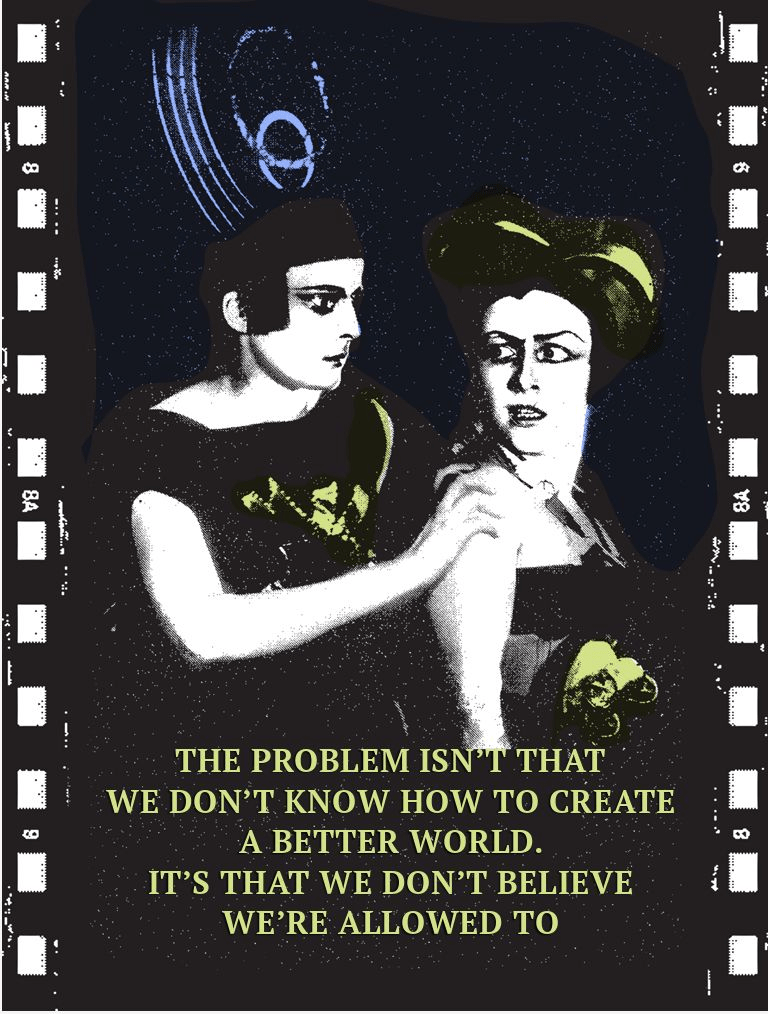
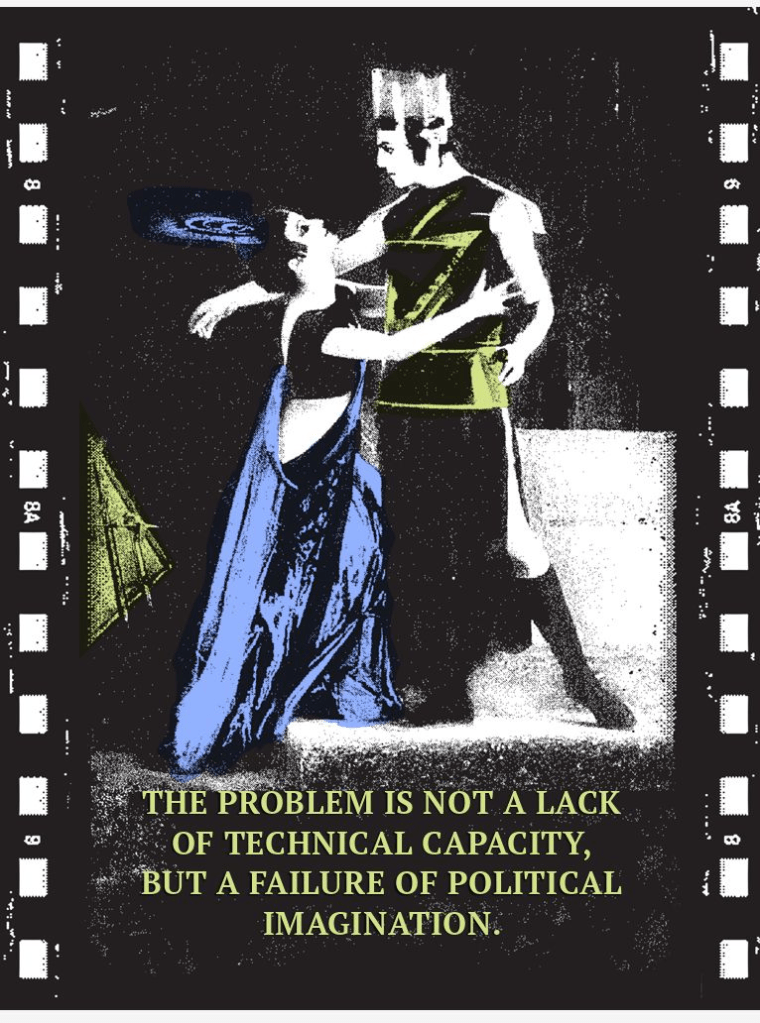
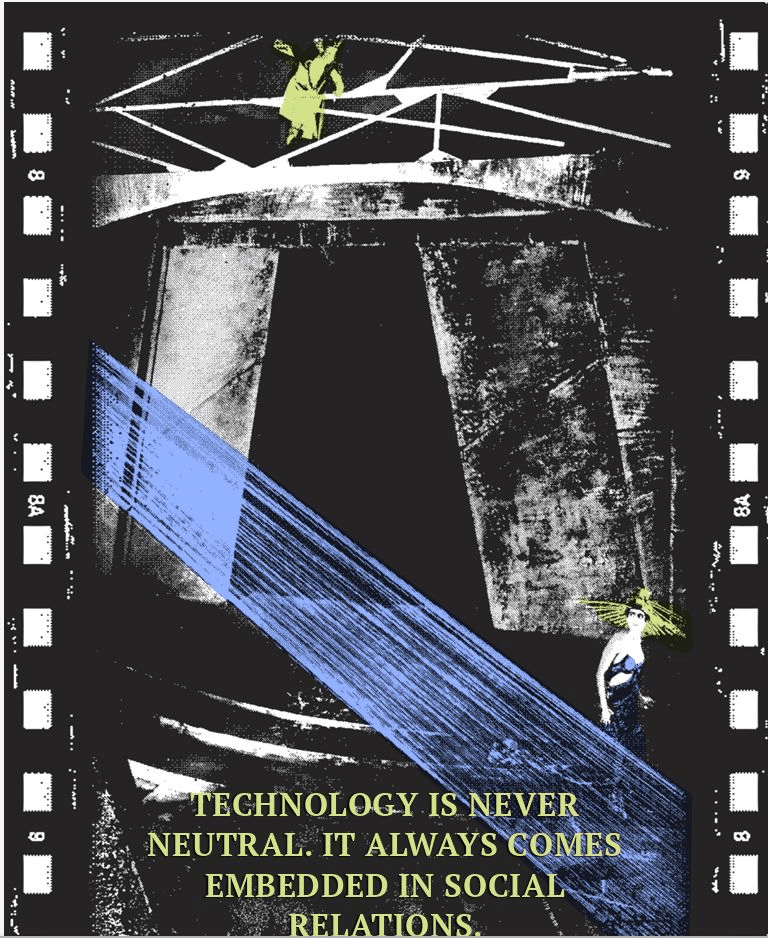
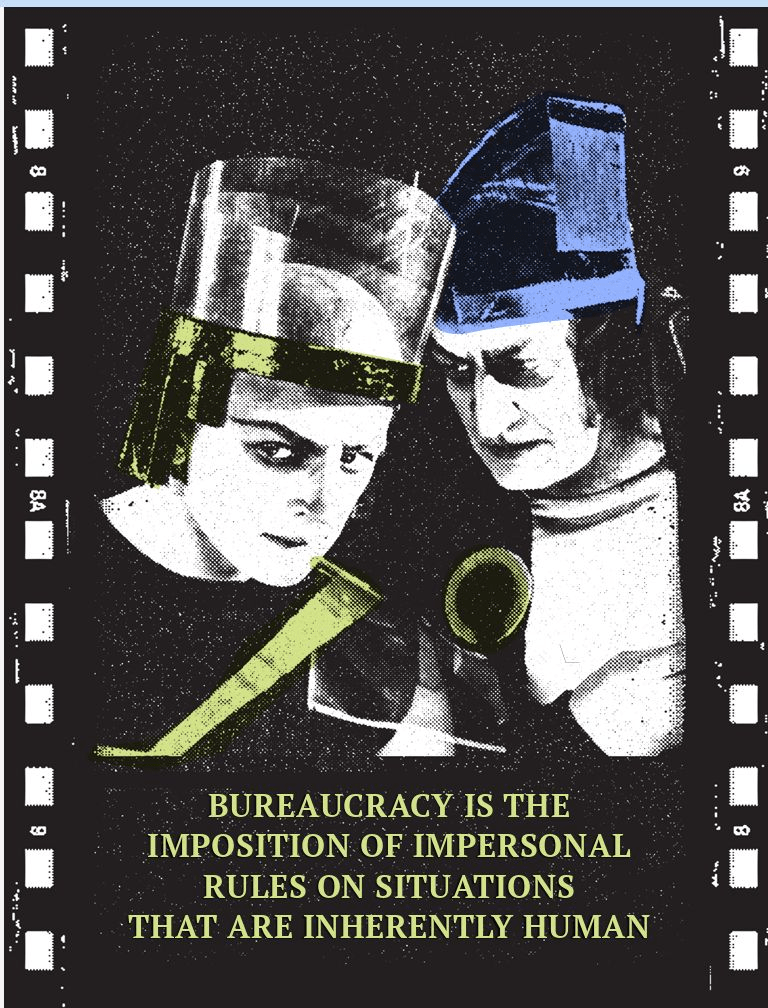
Posters for David Graeber’s Pamphlet “POETIC VS BUREAUCRATIC TECHNOLOGIES”
Poetic technologies are when you harness rational, systematic organization (bureaucracy, engineering, precise coordination) to realize imaginative, crazy dream.
What we now have are what I would call bureaucratic technologies. The Internet is a perfect example… We have people using all sorts of creative energies, insights and innovation to create ever better platforms to fill out forms. The imagination now exists in the service of bureaucracy, a bureaucracy which thus encompasses every aspect of our lives.
The historical shift happened around the 1970s: from investment in poetic technologies (space, robotics, radical transformation) to bureaucratic technologies (information systems, surveillance, control, financialization).
Posters for David Graeber’s Pamphlet “POETIC VS BUREAUCRATIC TECHNOLOGIES. “ Poetic technologies are when you harness rational, systematic organization (bureaucracy, engineering, precise coordination) to realize imaginative, crazy dream.
What we now have are what I would call bureaucratic technologies. The Internet is a perfect example… We have people using all sorts of creative energies, insights and innovation to create ever better platforms to fill out forms. The imagination now exists in the service of bureaucracy, a bureaucracy which thus encompasses every aspect of our lives.
The historical shift happened around the 1970s: from investment in poetic technologies (space, robotics, radical transformation) to bureaucratic technologies (information systems, surveillance, control, financialization).
to me.. the thing we keep not using tech for is to me.. the thing we need most and we can’t seem to do.. that non judge mental ness.. ie: pearson unconditional law et al.. for (blank)’s sake..