james c scott
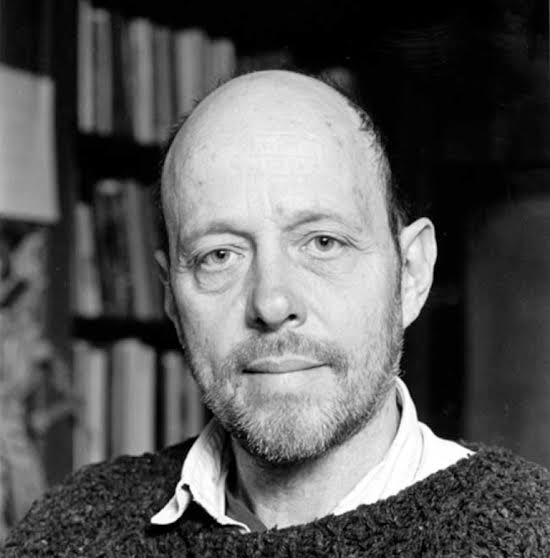
image linked to (2017) – An Interview with James C. Scott | Harry G. West and Celia Plender – from Gastronomica 15:3 – [https://gastronomica.org/2017/03/14/an-interview-with-james-c-scott/] – thinking i should read this
adding page while reading two cheers for anarchism.. and after reading ie: art of not being governed and ?
also kevin carson refs scott a lot ie from communism of everyday life:
Graeber is one of those anarchist (or anarchist-ish) thinkers who, despite possibly identifying with a particular hyphenated variant of anarchism, have an affection for the variety and particularity of self-organized, human-scale institutions that goes beyond ideological label. These people, likewise, see the relationships between individual human beings in ways that can’t be reduced to simple abstractions like the cash nexus or doctrinaire socialism..t I selected James Scott and Elinor Ostrom for C4SS research papers *based on this quality, and I read Debt in the course of researching a similar paper on Graeber’s thought. I expect to continue with papers on Pyotr Kropotkin and Colin Ward who, despite identifying as libertarian communists, cannot be reduced to any ideological pigeonhole based on that label.
thinking i should read this via kevin (2011) – Legibility & Control: Themes in the Work of James C. Scott – [https://c4ss.org/content/7225]
[finallly reading it – legibility and control – at same time as against the grain]
then from crispen sartwell – The Only Academic Who Mattered – thinking i have notes on this perhaps on david dying page – [https://www.splicetoday.com/writing/the-only-academic-who-mattered]:
I read him primarily as a political philosopher: it seemed to me that Graeber and his colleague James C. Scott (they were both at Yale in the early-2000s) made the greatest contribution to anarchist political theory since Peter Kropotkin in the late-19th century. Graeber’s thought and presence were also central to the Occupy Wall Street movement, and he traveled all over the world as an activist, including trying to help organize the Kurdish enclave of Rojava as what he called a “provisional autonomous zone” in a gap between Syria and Turkey, as Russian, Iranian, American, and ISIS militaries swirled about. He also wrote the delightful and disturbing book Bullshit Jobs (2018), which had a great popular run and the title of which has entered the vernacular.
__________
__________

James C. Scott (December 2, 1936 – July 19, 2024) is an American political scientist and anthropologist specializing in comparative politics. He is a comparative scholar of agrarian and non-state societies, subaltern politics, and anarchism. His primary research has centered on peasants of Southeast Asia and their strategies of resistance to various forms of domination. The New York Times described his research as “highly influential and idiosyncratic“.
Scott received his bachelor’s degree from Williams College and his MA and PhD in political science from Yale. He taught at the University of Wisconsin–Madison until 1976 and then at Yale, where he is Sterling Professor of Political Science. Since 1991 he has directed Yale’s Program in Agrarian Studies. He lives in Durham, Connecticut, where he once raised sheep.
The Moral Economy of the Peasant
Main article: The Moral Economy of the Peasant
During the Vietnam War, Scott took an interest in Vietnam and wrote The Moral Economy of the Peasant: Rebellion and Subsistence in Southeast Asia (1976) about the ways peasants resisted authority. His main argument is that peasants prefer the patron-client relations of the “moral economy”, in which wealthier peasants protect weaker ones. When these traditional forms of solidarity break down due to the introduction of market forces, rebellion (or revolution) is likely.
Weapons of the Weak
In Weapons of the Weak: Everyday Forms of Peasant Resistance (1985) Scott expanded his theories to peasants in other parts of the world. Scott’s theories are often contrasted with Gramscian ideas about hegemony. Against Gramsci, Scott argues that the everyday resistance of subalterns shows that they have not consented to dominance.
to me.. re ness is a perpetuation of that dominance ness
Domination and the Arts of Resistance
In Domination and the Arts of Resistance: Hidden Transcripts (1990) argues that subordinate groups employ strategies of resistance that go unnoticed. He terms this “infrapolitics.” Scott describes the public interactions between dominators and oppressed as a “public transcript” and the critique of power that goes on offstage as a “hidden transcript.” Groups under domination—from bonded labor to sexual violence—thus cannot be understood merely by their outward appearances. In order to study the systems of domination, careful attention is paid to what lies beneath the surface of evident, public behavior. In public, those that are oppressed accept their domination, but they always question their domination offstage. On the event of a publicization of this “hidden transcript”, oppressed classes openly assume their speech, and become conscious of its common status.
Seeing Like a State
Main article: Seeing Like a State
Scott’s book Seeing Like a State: How Certain Schemes to Improve the Human Condition Have Failed (1998) saw his first major foray into political science. In it, he showed how central governments attempt to force legibility on their subjects,..t and fail to see complex, valuable forms of local social order and knowledge. Scott argues that in order for schemes to improve the human condition to succeed, they must take into account local conditions, and that the high-modernist ideologies of the 20th century have prevented this. He highlights collective farms in the Soviet Union, the building of Brasilia, and Prussian forestry techniques as examples of failed schemes.
literacy and numeracy both elements of colonialism/control/enclosure.. we need to calculate differently and stop measuring things
The Art of Not Being Governed
Main article: The Art of Not Being Governed: An Anarchist History of Upland Southeast Asia
In The Art of Not Being Governed, Scott addresses the question of how certain groups in the mountainous jungles of Southeast Asia managed to avoid a package of exploitation centered around the state, taxation, and grain cultivation. Certain aspects of their society seen by outsiders as backward (e.g., limited literacy and use of written language) were in fact part of the “Arts” referenced in the title: limiting literacy meant lower visibility to the state. Scott’s main argument is that these people are “barbaric by design”: their social organization, geographical location, subsistence practices and culture have been carved to discourage states to annex them to their territories. Addressing identity in the Introduction, he wrote:
… All identities, without exception, have been socially constructed: the Han, the Burman, the American, the Danish, all of them … To the degree that the identity is stigmatized by the larger state or society, it is likely to become for many a resistant and defiant identity. Here invented identities combine with self-making of a heroic kind, in which such identifications become a badge of honor …— (pp. xii-iii.)
marsh label law et al
Against the Grain
Main article: Against the Grain: A Deep History of the Earliest States
Published in August 2017, Against the Grain: A Deep History of the Earliest States is an account of new evidence for the beginnings of the earliest civilizations that contradict the standard narrative. Scott explores why we avoided sedentism and plow agriculture; the advantages of mobile subsistence; the unforeseeable epidemics arising from crowding plants, animals, and grain; and why all early states are based on millets, cereal grains and unfree labor. He also discusses the “barbarians” who long evaded state control, as a way of understanding continuing tension between states and non subject peoples.
Other works
In Two Cheers for Anarchism: Six Easy Pieces on Autonomy, Dignity, and Meaningful Work and Play from 2012 Scott says that “Lacking a comprehensive anarchist worldview and philosophy, and in any case wary of nomothetic ways of seeing, I am making a case for a sort of anarchist squint. What I aim to show is that if you put on anarchist glasses and look at the history of popular movements, revolutions, ordinary politics, and the state from that angle, certain insights will appear that are obscured from almost any other angle. It will also become apparent that anarchist principles are active in the aspirations and political action of people who have never heard of anarchism or anarchist philosophy.”
________
via tweet [https://x.com/nonserviammedia/status/1815418400526774542]:
“[T]he great emancipatory gains for human freedom have not been the result of orderly, institutional procedures but of disorderly, unpredictable, spontaneous action cracking open the social order from below.” James C. Scott (1936 – 2024)
carhart-harris entropy law et al
_________
rip
________
________
________
_________
- anarch\ism
- accidental anarchist
- anarchism and other essays
- anarchism or rev movement
- anarchist communism
- anarchist library
- anarchists against democracy
- anarchy after leftism
- anarchy in manner of speaking
- anarchy works
- art of not being governed
- at the café
- billionaire and anarchists
- david on anarchism ness
- enlightened anarchy
- fragments of an anarchist anthropology
- freedom and anarchy
- graeber anarchism law
- inventing anarchy
- is anarchism impossible
- kevin on anarchism w/o adj
- nika on anarchism
- on anarchism
- post scarcity anarchism
- two cheers for anarchism
_________
________
_________





 be you.