connie yowell
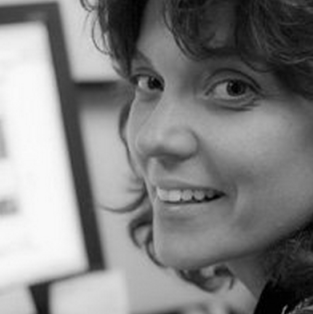
First intro to Connie, was the dml conference 2012, loved her provocations.
The came Nic’s string of videos with the connected learning (dml ness) people.
Connie
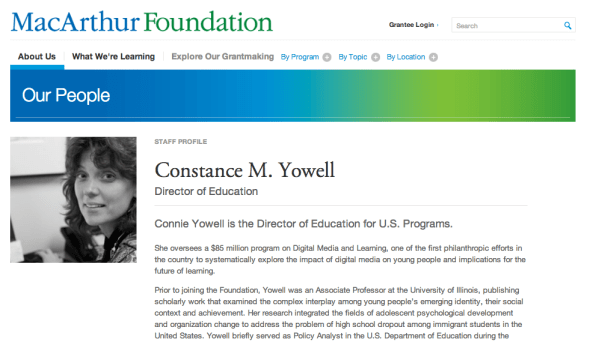
And, among many places, you can also find her on Huffington Post:

_________________________
interview with Jeff Brazil – w/launch of connected learning alliance.. may 2014:
http://clalliance.org/whatsnew-main/connie-yowell-podcast-making-learning-relevant/
__________________________
various notes from taking her in:
friday, august 3, 2012
connie yowell
keynote-kickoff-connie-yowell/peer culture
interest
academic spheresounds quite simple, but incredibly difficult to implementnot only are kids learning 21st cent skills but also common core that we care about (?)connected learning is not:
kahn academy et al as the answer – that’s not the digital media we’re talking aboutwhat we’ve learned from spending time with kids online
media usage study – 7-8 hrs a day – when multi-tasking – could count as 10 hrs a day
we’re concerned much less with hrs and much more with – what are they doing…
| JonBarilone | 9:18 AM |
| (Intro to connected learning by Mimi Ito; includes link to Digital Youth Research study:http://www.itofisher.com/mito/weblog/2012/03/connected_learning.html ) | |
| monk51295 | 9:18 AM |
| jon – this? http://digitalyouth.ischool.berkeley.edu/report | |

discrepancy – how engaged kids are online – and how diff it is from school classroom
first place we turn to for spaces for playing and tinkering… libraries.. youmedia
| media rocks http://youmediachicago.org/ |
| David Weksler | 9:24 AM |
| Library in Ridgewood, NJ has a restaurant in the building – elem. kids read to dogs to improve their reading – great library | |
| http://www.ridgewoodlibrary.org/ |
| very progressive place which makes it COOL to be in the library |
how incredibly important performance is to kids – but to their peers – not to adults…
main question…
what is the experience we want youth to have… what is the roll of youth, adults, digital media
can it maybe be – what is the experience each person wants to have? could we even simply – facilitate curiosity from within?
design principals:
| http://connectedlearning.tv/connected-learning-principles |
| (Quest to Learn: http://q2l.org) |
reimagining new ideas – is hard to do on your own – new ideas often come from adjacent domains
found – game design is very similar to curricular development
we started thinking of game design as pedagogy
what curriculum and pedagogy can look like if we bring two extraordinary worlds together
quest to learn:
| http://vimeo.com/16633028 |
grades 6-9 in nyc – opened in 2009


above – core assumptions about innovation – via mit media lab
love this

how do we integrate this
it’s not clear to me that that can only happen in schools – learning everywhere – learning through networks…
network the informal world..
how do you use a connection between in and out of school to create safe spaces for adults to learn..
it’s not clear to me that we have these spaces for educators either
we need a new narrative.. indeed..
oh my. i love your thinking Connie..
we need to hear you more..
grazie
connie yowell
group doc macarthur – chicago
MacArthur Foundation: http://www.macfound.org/
give out 280 mill/yearnational and global1980 on – focus on public ed
up until 2005 – it was school reform..
since then – how to reimagine learningshift – was away from focus on core outcomes
rather establishing core questions
change from talking about ed to talking about learning – which realizes that learning happens everywhere
really wanted to understand learning from users perspective rather than institutional outcomesmacarthur is now 100 mill into researchlearning most robust when we focus on 3 areas:
peer, interest, academic/civic/career success

Full infographic here: http://connectedlearning.tv/infographic
goals of ed: lifelong learning, democracy, economic self-sufficiency
still 200 yrs later.. same goals.. may look dramatically different however..
and to do that with a value set of equity at the forefront
speakers of 21 last sessions – that address these
joining Connie are Doug Belshaw, Marsha Semmel, and ‘Brother Mike’ Hawkins.
onbarilone: The HIVE Fashion Project:http://explorecreateshare.org/2012/07/20/next-seasons-hottest-trend-hive-fashion/
ChrisLarry: More Hive Fashion:http://explorecreateshare.org/2012/08/09/dreamyard-fashion-week-in-the-bronx/
ChrisLarry: DreamYard is a YouMedia in NYC
hive – can we through grants, bring the institutions on the ground with online so that they become part of a networked fashion
institutions – are part of an innovation community
Schools are a “node in [students’] broader network of learning” -Connie
Question from Brad: “Checking my understanding. I’m hearing a lot about the macro-features of connected learning and am trying to ground it in the micro. Is it possible for connected learning to take place without fundamental transformations in power relations between youth and adults? It seems that a fundamental contradiction in Learning 1.0 is that youth are seldom acknowledged interactively as knowledge-holders. I’m trying to weave the macro and micro aspects of the connected learning concept to imagine how it can transform Learning 2.x “
aggregating resources here: http://groups.diigo.com/group/connected-learning
my notes as i listened the first time:
might curiosities always sit at the heart of an extraordinary education….?
absolutely….

how do we create these experiences?
are they not already in life? can’t we trust that?
do we have to connect things for kids? or do we have to not disconnect them in the first place?
perhaps there’s a nother way… ie: hosting-life-bits via self-talk as data.. as the day [aka: not part\ial.. for (blank)’s sake…]
watch on dml site, and find 5 other videos via dml and nic askew
from amy:
I loved it… until around minute 4. Maybe she isn’t meaning like it like this, but it sounds like the usual educational gamification hoopla to me. I know my kids learn a lot through gaming, but…
Those games that are designed specifically for learning certain things are no better than a teacher giving a full-sized candy bar as a prize for accomplishing some task. I’m not saying that because I have a problem with *candy bars* — I’m saying that it’s still for some external reward, and thus unlikely to make a lasting impression on learning. And, the situation was usually put into the context of some goofy contrived frame of reference that a child would never experience in real life. Like (taking her example of fractions), “To get to level two, we need to cooperate and get all eight pieces of the pie! Oh, we only have two pieces, that is one quarter! We still need six pieces, or three quarters!!”What about cooking in the kitchen, and you can’t find the 1/2 cup measure — so you eyeball it with a third of a cup, or two fourth cups, or whatever — and your cake or bread comes out dry and crumbly? Then, a person is more inclined to think, “Heck! I better find that half cup measure next time. I think I added too much flour…”And then, around six minutes, she talks about how we’re looking at what kids are doing, separately from content. And she’s talking about “designing” the content so it is something they will like. I think that’s where it has gone wrong. I think there are plenty of things already out there for kids to like in life outside of school, and they need freedom, and THE ONUS IS ON US AS ADULTS TO BE CREATIVE AND SEE THE WORTH IN WHAT THEY ARE ALREADY DOING, INSTEAD OF TRYING TO SUPERIMPOSE VALUE ON THEIR ACTIVITIES, BY CONTROLLING THE CONTEXT.A good example is Minecraft. Here’s an article Ken sent us last week:
http://qz.com/32868/could-minecraft-be-the-next-great-engineering-school/
It’s a sandbox, much the way life is.
from the article – loving:
Minecraft has become a kind of anarchic massive open online course (MOOC) all on its own, without developing courseware or costly new program licenses. Part of the proliferation is due to user-created video, particularly on YouTube, where a quick search yields 7.5 million mentions.
_________________
latest:
http://www.huffingtonpost.com/pharrell-williams/reimagine-ed_b_3344224.html
Our future is brilliant. You see, together, we are turning the tide.
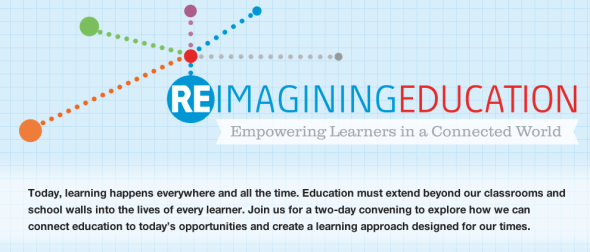
addressing this:
_________
Connie on Brother Mike:
http://dmlcentral.net/blog/constance-m-yowell-phd/revolution-thank-you-brother-mike
I have always been in awe of his ability to listen so keenly to the youth, to understand their world, to create safe and inviting spaces for them, and enable their critical and thoughtful and creative voices;
Within a year of opening, Brother Mike, Taylor Bayless, and Erica Neal had developed and implemented what would become the YOUmedia (so named by the youth) signature projects: One Book One Chicago, Digital City Planner, Lyricist Loft, and the Mark Bradford Project.
At a time when youth violence in Chicago was drawing national headlines, youth from all over the city were coming to find a safe haven, a place for creativity and voice, and a trusted mentor — someone who nudged, prodded, guided and celebrated them as they danced, veered, ducked or ran headlong toward adulthood.
His ability to own the culture and artistry of the street, to deeply know, listen and understand youth, and to create opportunities for them to explore identity and culture and build skills while truly making…revolution indeed. That was his word. And, in his case, it applied.
We have become fond of saying that Brother Mike could turn a moment into a movement.
And he didn’t transcend age, race, gender, class, sexual orientation — he connected them. He did it through listening, inspiring, guiding, and most importantly — as he would say — letting you know you were loved.
________
oct 2015 – launch of lrng





 be you.