Every year since 2021, our Annual David Graeber Memorial Lecture Series brings together David’s friends, collaborators, colleagues, and readers across international and disciplinary boundaries.
This year’s lecture title is “Conditions of Life Calculated…” on the Gaza Genocide.
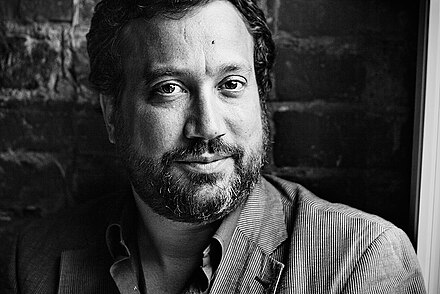
Eyal Weizman is the Founder and Director of Forensic Architecture and professor of Spatial and Visual Cultures at Goldsmiths, University of London, where in 2005 he founded the Centre for Research Architecture. In 2007, with Sandi Hilal and Alessandro Petti, he established the architectural collective DAAR in Beit Sahour/Palestine.
He is the author of numerous books, including Hollow Land, The Least of all Possible Evils, Investigative Aesthetics, The Roundabout Revolutions, The Conflict Shoreline, FORENSIS, and Forensic Architecture: Violence at the Threshold of Detectability.
Eyal has held positions in universities worldwide including Princeton, ETH Zurich and the Academy of Fine Arts in Vienna. He is a member of the Technology Advisory Board of the International Criminal Court (ICC) and is on the board of directors of the Centre for Investigative Journalism (CIJ).
In 2019, he was elected life fellow of the British Academy. In 2020, he received an MBE for ‘services to architecture’. He was the recipient of the London Design Award (2021) and the Mark Cousins Theory Award (2024). Forensic Architecture is the recipient of a Peabody Award for interactive media, the European Cultural Foundation Award for Culture, and the RIBA Charles Jencks Award.
Weizman was featured in “The Architecture of Violence”, a film produced for the series Rebel Architecture broadcast by Al Jazeera English
notes/quotes from lecture:
245 present
conditions of life calculated comes out of 1948 genocide prevention.. calc’d to bring about the destruction of the group.. intended to criminalize not only direct form of killing.. but one that is undertaken thru destruction of fundamentals of human life
combo of words familiar to architects ‘calcs that max human life’.. environ maintains life.. human like a muscle in the shell.. shell destroyed.. and transmits violence onwards.. and that is the act of killing.. makes genocide expensive in both space/time
cities as tech to keep people alive.. these slow process of genocide often not seen.. killing people over time.. reservations, safe zones, protections zones.. in fact slowly killing
bombing of a diff kind.. dropped pieces of paper.. softly falling on gaza.. bizzarre images.. dropped on what has already been destroyed.. in them.. words and maps.. ie: evacuate immediately et al.. warning as speech acts.. in vain of ‘we’re saving you’.. so choice: treacherous journey or stay and die.. but a day was not long enough to evacuate 100 mill people..
plan to displace palestinians via reconstruction.. destroy gaza econ.. de development.. calculated way of destroying conditions of life of people in gaza so that they move..
dang.. both zooms at same time.. switching over to other zoom .. said this one is recorded too.. hope i can get it
David Graeber’s birthday takes place on February 12. To celebrate, we will host events in both New York and London, with James Schneider and Sophie Scott-Brown speaking that will be shown live via Zoom.
In London, they will speak at Housmans Bookshop, 5 Caledonian Rd, N1 9DY at 6pm GMT.
There will be a talk from New York by Nika Dubrovsky together with our friends from MayDay (176 St Nicholas Ave, Brooklyn, NY), where the visual assembly, City of Caring, will take place.
Feel free to come to the event in NYC, to Housmans in London, or join us at the zoom.
Bring cakes, candles and champagne and make it a celebration of David Graeber!
We’ll talk about the release of the anniversary edition of Fragments of Anarchist Anthropology, with a foreword by Sophie Scott-Brown and participation of James Schneider.
s: never been better/worse time to be an anarchist.. people who wouldn’t call self anarchist but finding they have to die together.. how do you do that w/in a reality that is a dying system..
s: talking about david’s anthropology and anarchy
s: *paradox of anarchy.. want to be free.. but can’t tell people how to be free..t what david did in his books.. expresses that occupy spirit but he doesn’t explain it away.. that’s what’s important to me.. not trying to erase individuality.. but evident it was collective.. i love that he didn’t have to resolve everything .. fully aware of all the possibilities..
s: way david approached anarchism was thru anthro.. ie: kropotkin’s mutual aid.. do it to disrupt dominant myths: human evolution, progress, civ, ineq, .. anarchists have a long history of doing this..
s: alt trajectory of human evolution.. just going back to indigenous does have problem.. we don’t have to draw a direct projectory.. all anthro has to do is show us ther are other possibilities.. about relationships w each other.. we change the state by contracting diff relationships.. and we need no more than knowing it’s possible.. right now we just need to believe in possibility
s: other side of david’s work.. use anarchism to enrich anthro.. or academic life.. one of least likely spaces you’ll find anarchism.. culture has rested on assumption .. anarchy/alts as secondary.. the notion that theory is how we make progress.. but of course that’s not true.. when make that selection you cause a reduction.. you lose the memory that we ought to be asking diff questions.. his version of anarchy is an invitation to a whole new radical way to do academic life.. no positions is static for long.. a free flowing phenom..
s: david asks us to disengage knowledge from authority.. so at this time his ideas matter more than ever
j: what would david think about now.. principles i admired in how he thought/acted in world: super pragmatic – anarchist and practical – both counter intell; not dogmatic – verbs not nouns – more of a doing; radical – getting to roots of system; generous; creative – this is the possibilities point – often most unsaid than said;.. so 4 dissents:
j: 1\ death spiral.. ie: in covid released formula for vaccines rather than only few have it.. to vaccine entire world; climate breakdown; genocide; 2\ ? 3\ tech over loards
nika in chat: Anthropology looks at the hidden structures of power, that exist in any society .. Anarchism is about how to live in society without coercion..t
we keep being distracted by these.. so we keep not getting to the root of problem
j: 4\ 6th &7th ring of hell – the far right.. inverse/obvious side.. happy/productive/free-time = danger
j: back to more possibilities/positives: 1\ end of unipolar fantasy.. watching us empire implode; no pt on rebuilding gaza
j: final pt in moving toward directin of heaven.. david really liked marcel mauss.. no society are ever just one thing.. schismogenisus.. do opp of way they act building on communism already present in our society
s: beautiful way to bring today concerns w david.. now entering new age of revolution.. no escaping/denying fact that our trust/faith/habitual-deference-to-authority.. we can’t hide behind them anymore.. we have a responsibility.. from that point.. many things will be possible.. (had to leave)
q&a
from live audience: david really laughs at the world.. a whimsical madness he perceives that he finds exiciting/brilliant.. this energy gives hope.. despite hie’s often talking about most depressing thing you’ve ever heard
via tom seiple in chat: (answering how do we opt out) I suggest reading “Jenny O’Dell’s book “How to Do Nothing” as part of that answer. It’s not a full answer, but it explores how to appropriately opt out, or rather, opt into things that are meaningful and not feeding the demons of the world.
live audience: how to get people to stop being addicted to phones
darwin muijono in chat: I think what resonate to me with James’ mention of Schismogenesis — doing the antithesis… is from David Graeber’s Fragments: “The easiest way to get our minds around it is to stop thinking about revolution as a thing—“the” revolution, the great cataclysmic break—and instead ask “what is revolutionary action?” We could then suggest: revolutionary action is any collective action which rejects, and therefore confronts, some form of power or domination and in doing so, reconstitutes social relations—even within the collectivity—in that light. Revolutionary action does not necessarily have to aim to topple govern- ments. Attempts to create autonomous communities in the face of power (using Castoriadis’ definition here: ones that constitute themselves, collectively make their own rules or principles of operation, and continually reexamine them), would, for instance, be almost by definition revolutionary acts.”
alex kampa: the problem w all mtgs convos.. we know the problems.. the real issue is the solutions.. what can we do.. restating problems.. rehashing.. we know how bad things are.. we need to come up w strategies of how to deal w them.. david has some hints.. he was good at analyzing problems but wasn’t the guy to provide real solutions.. we need to have discussions really focusing on what we can do
j: laughing at world – pt if can’t have fun.. just socializing spontaneously w/o planning is important.. one of the things being robbed from us.. good things come out of stupid things.. meditating for alt of emptiness; organizing;
j: young people.. david extremely comfortable w them.. part of because so playful.. child ish energy..
j: the reason people care about palestine is it’s revealing the system.. the practical solutions are already here.. lots of people org-ing .. and not one act of solution.. these things add up.. there isn’t a straight line.. not a magic solution.. none of societies david studied come out of the brain of
stas: didn’t know david personally.. but i see all the people who celebrate his ideas to be practical.. one thing that struck me during this discussion.. to be practical isn’t necessarily to be specific.. how is practical always being specific misses everyone else.. if helping one not helping other.. try to name all the problems and miss some.. makes people angry.. what was david doing right that he could do one thing at a time and everybody celebrated it for them
nika: actually when david was alive he was constantly attacked.. people wouldn’t be celebrating him all the time
live audience: talk on realities leaves us in despair.. david was good at pulling us out of that
live audience: struck by glee us empire has been spoken about .. danger some will experience.. it’s a kind of somber moment.. people w/in imperial core will be deeply effected
julyan levy: more than human anarchism.. decentering of human (to the non human parts).. what were david’s thoughts on that
kate ludicrum: disaster optimism is a thing.. but while climate crumbling.. (speaking from la).. spirit on the ground is delightful because bureaucracy simply does not apply..t how can we in this room help the dgi.. i would like to pay forward today after we leave
nika: we will create new world .. thank you for the disaster optimism.. i will use that
j: to be truly radical is to make hope seem possible not despair seem convincing.. raymond williams






 be you.