chuck close
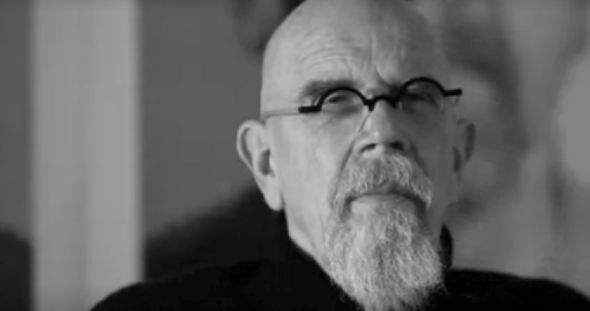
[ny]
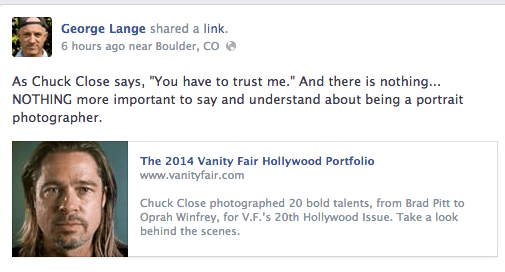
intro’d to Chuck via George‘s post here:
____________________

it’s collaborative, i’m just not comfortable not letting them be a part of the process
somebody shows people as real people, the way they are, and their humanity shows through..
___________
CHRISTOPHER FINCH: Prosopagnosia.
JEFFREY BROWN: Yeah. Now that means that you can’t recognize faces or you have trouble?
CHUCK CLOSE: It’s a sliding scale. I have a great deal of difficulty recognizing faces, especially if I haven’t — if I’ve just met somebody, it’s hopeless. I will never remember them again unless it’s reinforced over and over and over, and even people that I know very well, if I haven’t seen them for a while. It’s like a bucket with a hole in it — information is coming in, but it’s pouring out the bottom just as fast, I’m often losing information.
JEFFREY BROWN: But you are — ok, but you’re known for portraits of faces.
CHUCK CLOSE: I was driven to make them, I am absolutely positive.
JEFFREY BROWN: That’s what did it?
CHUCK CLOSE: Because in real life if you move your head a half an inch, to me it’s a whole new face I’ve never seen before. But if we flatten it out — I have and I take photographs — I work from photographs and make flat things called paintings and prints. I have virtual photographic memory for anything that is flat, so it’s not an accident that I only do images of people who matter to me — family, friends, other artists. There are no commissioned portraits. These are images that really matter, and I want to commit them to memory and the only way I can really do that is to flatten them out, scan them, make these drawings and paintings and prints. And then they enter my memory bank in a different sort of way.
___________

Charles Thomas “Chuck” Close (born July 5, 1940) is an American painter and photographer who achieved fame as a photorealist, through his massive-scale portraits. Though a catastrophic spinal artery collapse in 1988 left him severely paralyzed, he has continued to paint and produce work that remains sought after by museums and collectors. Close currently lives and works on the south shore of Long Island, New York and New York’s West Village and in Bridgehampton, New York.





 be you.